Citroën C15, Nissan Vanette, and others once ruled Spanish streets. Their fading presence marks a real shift in how Spain moves and remembers its working vehicles.
Walk through a Spanish village today. You might not see a Citroën C15. That wasn’t always the case. These vans once lined curbs, carried bread, and hauled tools. They kept towns running. Now, their absence says a lot about how Spain’s roads and routines have changed.
For years, the Nissan Vanette and Renault 4 Furgoneta blended into the background. The Vanette’s second generation, launched in 1985, became a fixture on the street and on TV. Manolo and Benito drove one in ‘Manos a la Obra’. Small businesses and families loved its size and flexibility. The Vanette badge even showed up as EBRO. That points to the tangled world of Spanish car manufacturing in the late 1900s.
EBRO has recently re-emerged as a significant player in the Spanish market, expanding its sales network to 100 locations and resuming production at the EBRO Factory in Zona Franca, Barcelona.
The Nissan Trade was a bigger, tougher option. It started as AVIA and EBRO before Nissan took over Motor Ibérica. The Trade stretched up to 5.9 meters. Even after production stopped in 2001, these vans kept rolling. They lasted because they worked. Tradespeople and delivery drivers relied on them for years.
But the Citroën C15 stands out. It’s the van everyone remembers. Built from the Citroën Visa, the C15 outlived its passenger car sibling. Simple mechanics. Tough build. Production ran into the mid-2000s. Some say every Spanish village still has one. Rural workers and city couriers trusted it. The C15 earned its reputation the hard way.
According to an official press release from Nissan Spain, the company maintains industrial operations in Barcelona, Ávila, and Los Corrales de Buelna, though its presence in the van segment is now part of history.
Bigger vans had their time too. In the 1980s, the Sevel partnership produced a platform that became the Fiat Ducato, Alfa Romeo AR6, Citroën C25, and Peugeot J5. Some had engines up to 95 CV. These vans changed over the years. Today, their descendants are the Fiat Ducato, Peugeot Boxer, Citroën Jumper, and Ram ProMaster. The old models are gone. Their DNA is still on Spanish highways.
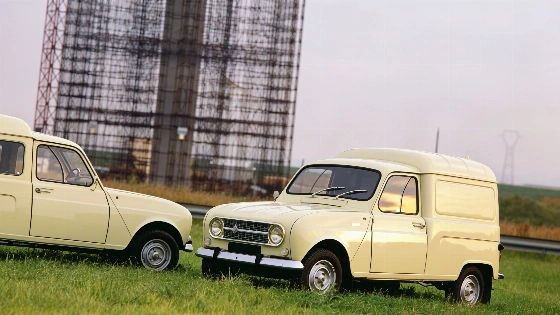
Competition was real. The Renault 4 Furgoneta, launched in 1961, stayed in production until 1991. It went head-to-head with the C15 for the title of Spain’s favorite small van. The Furgoneta came from the sturdy Renault 4. It was easy to adapt and lasted longer than many rivals. The Renault Express replaced it, but the original Furgoneta still lingers in memory, especially outside big cities.
Some vans, like the SAVA J4, never became household names. Still, they mattered. Built in Valladolid under license from Morris Motor Company, the SAVA J4 (also sold as Pegaso J4) served Spanish businesses from 1965 to 1989. British roots. Spanish hands. The J4 shows how global ideas shaped Spain’s factories.
Mercedes-Benz left its mark too. The MB 100, launched in 1981 and built in Vitoria, stood out for its boxy look and forward cab. It came in several body styles. There was even a rare AMG version with 95 CV. Production ended in 1995. Enthusiasts still spot its sharp outline on the road.
As these vans vanish, Spain’s vehicle fleet gets older and dirtier. A recent report highlights this trend. The move away from tough, fixable vans to newer, more complex models raises tough questions. What about cost? What about sustainability? The future of Spanish mobility is up for debate.
But this isn’t just about engines or emissions. These vans were more than metal. They were tools, local symbols, and silent witnesses to decades of change. Their slow disappearance isn’t just about mechanics. It shows how Spain’s ties to work, travel, and community have shifted. Some of these vans still roll through small towns. They remind us that progress often means losing what once felt ordinary.