Iberia’s 1946 flight to Buenos Aires carried four women working in a role that had no settled name. The journey took 36 hours and required three refuelling stops.
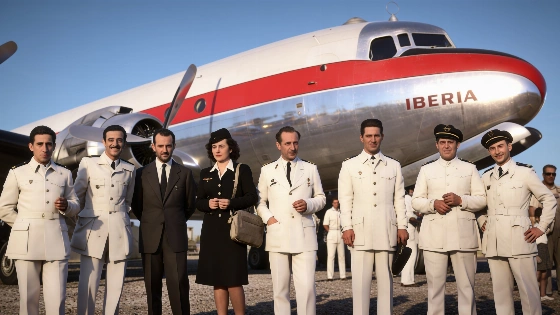
Three refuelling stops separated Madrid from Buenos Aires on a 36-hour flight carrying 28 passengers. On 15 October 1946, four women aboard Iberia’s Douglas DC-4 were doing work for which the industry had yet to settle on a name. The service departed from Madrid’s Aeropuerto Nacional de Madrid, also known as Barajas, and the route operated roughly once every ten days that year.
Pilar Mascías and Marichín Ruiz attended to passengers on the long journey, alongside María José Ugarte and Ana Marsans. The trip was still marked by discomfort and uncertainty. Their duties included serving food and helping travellers feel calm. The menu included fried chicken and Spanish omelette. Small cardboard boxes also held hard-boiled eggs and chocolates. Recruitment for the role emphasized language skills, particularly English, as the route crossed several countries and served international passengers.
The aircraft first stopped at Villa Cisneros in the Sahara, then refuelled at Natal. Rio de Janeiro was the next stop before it reached its destination. These intermediate stops reflected the limitations of post-war long-haul travel by piston aircraft.
The price made the trip inaccessible to most workers. A one-way ticket cost 11,435 pesetas and a return ticket cost 20,583 pesetas. Average wages in Spain were between 300 and 400 pesetas a month. At those rates, a worker would have needed more than four years of full pay to cover the return fare.
The job title was unsettled too. Alternatives included aeromozas and aeroviarias, alongside mayordomas and provisorias. The word azafata eventually prevailed, although it gave little indication of the safety responsibilities that would become basic to cabin crew work.
In 1947, Fernando Castillo became Iberia’s first male flight attendant. He had previously worked as a waiter in a luxury restaurant in Madrid. The profession is now generally described as cabin crew, or tripulante de cabina de pasajeros (TCP) in Spanish.
Cabin crew duties today include checking emergency equipment and managing evacuations. They also respond to medical emergencies. Iberia’s cabin-crew workforce now numbers more than 4,000 professionals. The figures cited for the airline put its cabin crew at 4,062, with women accounting for 67%.
The story also has a small connection to Spanish cinema: an Iberia publicity photograph from the early 1980s showed a young José Coronado dressed as a flight attendant, before he became one of Spanish cinema’s prominent actors. RUSSPAIN has also revisited the country’s transport history in its account of the Seat 1200 Sport Bocanegra.