On September 22, all interurban buses in Murcia will run free for a day. The regional government wants to change daily routines, push greener travel, and show off its investment in electric buses and better access for everyone.
On September 22, every interurban bus in Murcia will be free. The region is putting itself at the heart of Spain’s move toward greener travel. Scrapping fares for the day is more than a nod to 'Día Mundial Sin Coches'. The government wants people to see public transport as a real option instead of driving.
Jorge García Montoro, who leads Infrastructure and Territorial Development, put it simply: “We are making public transport more affordable, accessible, and sustainable, with measures that impact price, quality, and efficiency.” This one-day fare break adds to the current 20 percent discount on multi-trip tickets. That discount already helps regular riders and gets more people to leave their cars at home.
According to several local media outlets citing the regional government, the free interurban transport initiative on September 22 covers all bus lines managed by the autonomous community.
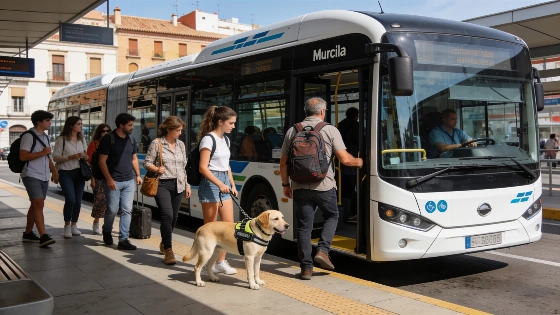
The plan goes further than just one-off deals. Seventeen fully electric buses from the new Movibus fleet are already running on main routes. The region plans to have 44 electric buses in total. Twelve of these connect Murcia with Alcantarilla, Beniel, and Santomera. Five more run between Murcia-Molina de Segura, Cabo de Palos-Veneziola, and La Unión-Cartagena. The investment is 28.7 million euros, with help from Next Generation EU funds. This shows the region is serious about cleaner transport for the long haul.
To back up the switch to electric, the region has set up 44 charging points in Cartagena, Alcantarilla, and Molina de Segura. More than 3.8 million euros went into these upgrades. These changes are already making a difference. This summer, bus services in La Manga were reinforced and carried over 594,000 passengers. Four extra buses—two of them electric—were added to handle the crowds.
Regional publications confirm that, in addition to interurban buses, city public transport in Murcia may also be free during this period, reflecting a broader policy to reduce car traffic and promote sustainable urban mobility.
Airport links have improved too. Since April, daily buses connect Murcia and Cartagena with the International Airport. Schedules match flight times. The region spends over 480,000 euros a year on this service. Officials are also asking the public for input on new rules for traveling with pets. The goal is to set clear standards for safety and animal welfare on public transport. The consultation is open until October 16.
Accessibility is a key part of the plan. In 2025, subsidies helped 1,054 people with disabilities travel—up 16 percent from the year before. Funding for these grants rose from 55,000 to 70,000 euros. There’s also a special program to help guide dog users get taxis, the first of its kind in Spain.
Murcia’s approach stands out in Europe, where more cities are trying car-free days and greener fleets. As reported earlier, Belgium recently had over seventy towns go car-free in a single event. This points to a bigger shift in how cities think about getting around.
What makes Murcia different is how it mixes quick incentives—like a day of free travel—with real investment in electric buses, charging stations, and better access for everyone. This is not just about one day without cars. The region is building a system where public transport is the easy choice for more people, more often. The government is putting real money into these changes and adjusting services as needs change. It’s a clear move toward cleaner, more inclusive travel in Spain.