Galicia has become Spain's second safest autonomous community, with crime rates far lower than the national average. New data shows a mixed picture: traditional crime is up slightly, but cybercrime is down.
Galicia is now the second safest region in Spain, according to new crime data from the Ministry of the Interior. The region recorded 35.3 criminal offenses per 1,000 people, well below the national average of 50.5. Only Extremadura reports a lower rate.
The numbers, covering January to June, show a mixed trend. Traditional crime in Galicia rose by 0.5%, but cybercrime dropped by 1.9% compared to the same period last year. While these figures are provisional, they suggest that security efforts are having an effect. An independent review by El Español found that Galicia's overall crime rate actually fell by 0.2% in the first half of 2026, pointing to general stability despite small shifts in certain categories.
The percentage of solved crimes in Galicia rose to 45.9% in the first half of 2026, up from 44.6% the previous year.
Crime rates vary across Galicia's provinces. Lugo has the lowest rate at 29.4 offenses per 1,000 residents, followed by Ourense at 31.3, Pontevedra at 35.2, and A Coruña at 38.2. These differences show that safety levels are not the same everywhere, but the overall trend for the region is positive.
The Ministry's report breaks down the details. Most crime categories are stable or falling. Brawls are down 1.8%, crimes against sexual freedom have dropped 4.1%, robberies with violence or intimidation are down 8%, and attempted homicides have fallen sharply from 35 to 22 cases, a 37.1% decrease. Some crimes have increased: sexual assaults with penetration rose slightly from 91 to 92 cases, home burglaries are up 12.3%, vehicle thefts increased by 7.3%, and drug trafficking cases rose 3.8%. El Español notes that this uneven pattern is typical for Galicia, with improvements in some areas and ongoing challenges in others, such as burglaries and drug-related offenses.
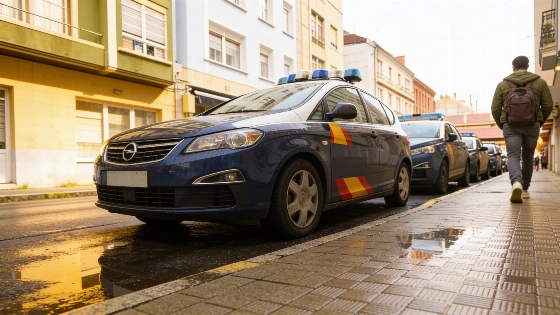
Pedro Blanco, the Government's delegate in Galicia, credits these results to a stronger security presence. The region now has 8,929 national police officers and civil guards, 581 more than in 2019. Blanco points to the daily work of these forces as a key reason for the low crime rate and says more staff and resources are planned to keep up the progress.
The official government position links Galicia's improved safety to the reinforcement of security forces, with 8,929 National Police and Civil Guard officers now deployed in the region—581 more than in 2019.
Other regions in Spain are facing their own changes in public safety and mobility. For example, Valladolid has seen a spike in traffic after cutting back on bike and bus lanes, showing how local policies can quickly affect daily life and security.
Data from Google/SpainAuto highlights not just Galicia's low crime rate, but also the shifts within different types of offenses. The drop in cybercrime suggests that targeted efforts may be working, even as some traditional crimes need more attention. The breakdown by province shows that safety is not uniform, with A Coruña facing more issues than Lugo or Ourense.
Galicia's ability to keep crime rates among the lowest in Spain, despite small increases in some categories, points to a steady approach to public safety. The region continues to add police and resources and closely tracks crime trends. While no area is free from change, Galicia's strategy shows that focused investment and ongoing attention can make a real difference for communities.