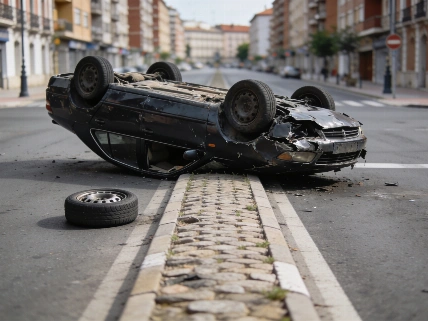
Alicia García cited 115 victims and hundreds of injured people as evidence of what she called failures in Spain's rail system. The reported death toll comprises 46 people killed in the Adamuz crash in Córdoba on 18 January 2026 and 69 in the Urda accident in Toledo on 28 October. The Adamuz collision involved an Alvia train and derailed carriages from an Iryo service. Both accidents occurred on the Madrid-Seville high-speed corridor. García used the figures to criticise the government during a media appearance in Burgos ahead of the 29 November election.
García, spokesperson for the Senate Popular Parliamentary Group and a candidate for Ávila, appeared with Burgos PP president Borja Suárez. Congressional lead candidate Ángel Ibáñez Hernando and other candidates from the province were also there. She called for a vote for PP leader Alberto Núñez Feijóo, describing his programme as a plan for national renewal.
García's rail criticism came alongside allegations about corruption. She argued that money had been diverted from management and linked that claim to fatal rail incidents. Preliminary reporting on the Urda crash pointed to a failure involving the LZB train-control system, while a technical report by the Spanish College of Civil Engineers did not assign responsibility. Judicial investigations into the accidents were ongoing. García also cited projects in Burgos that she said had been neglected for eight years: the Duero motorway, the Camino de Santiago motorway and the unrecovered direct Madrid-Aranda-Burgos train service.
Feijóo, she said, had an infrastructure plan with funding and deadlines. PP campaign reporting put the proposed programme at €300 billion, including restoration of the direct Madrid-Aranda de Duero-Burgos rail service and work on the Duero and Camino de Santiago motorways. García also promised an audit to investigate what she called hidden problems in the Transport Ministry. She cited 131 people in the PSOE's orbit whom she described as implicated, and referred to UCO activity at two institutions, the Court of Auditors and the Equality Ministry. Separately, the European Public Prosecutor's Office opened inquiries into possible fraud involving European funds for railway maintenance near Adamuz and upgrades on the Madrid-Seville line. The upgrades include safety work, signalling and communications improvements, and the planned replacement of LZB with ERTMS. These investigations have not established that diverted funds caused either accident. Reuters reported that Transport Minister Óscar Puente resigned after the crashes and Deputy Prime Minister Carlos Cuerpo was appointed to provisionally run the ministry.
The rail-safety dispute also prompted industrial action: train drivers called a 24-hour nationwide strike for 11 November, with further strikes scheduled for 17 and 23 November. García spoke as the crashes remained part of the political debate ahead of the election. She also accused the government of collecting more tax than ever while public services had worsened. On housing, García presented a PP pledge to build one million homes and said a Feijóo government would introduce two laws during its first 100 days: a Land Law and a measure intended to remove squatters within 48 hours. These are campaign proposals, not measures already in force. She also promised tax deductions for young people buying a first home, renters and landlords.
García condemned an assault on Guipúzcoa congressional candidate Jon Echeverría and other PP colleagues, saying her party would continue to defend freedom. She also criticised the PSOE over Begoña Gómez and former housing minister Ábalos, arguing that rising costs were making everyday shopping and fuel harder to afford, alongside housing.
Separately, an earlier report covered the Andalusian Health Service's definitive doctor job-bank lists in earlier coverage.