Bifuel car owners in Spain are reworking their travel habits as GLP stations offer a real way to cut fuel bills. Route planning, real savings, and knowing the rules now matter more than ever for drivers looking to spend less.
GLP, or Autogas, has become a key factor for Spanish drivers with bifuel cars. The price at the pump is often lower than gasoline. But saving money takes more than just picking the right fuel. It takes planning. It takes attention to detail.
GLP stations are not everywhere. Gasoline and diesel pumps are easy to find, but GLP outlets are fewer and can close or change location without notice. A static map is useless. Drivers need to check updated station locators, compare prices, and always have a backup plan. The range of a bifuel car depends on finding the next working GLP pump. Never let the tank run dry if you are not sure where the next station is. The CNMC has reported on competition in the Spanish fuel market, including probes into big oil companies. But these reports do not cover GLP pricing or how easy it is to find a station.
The CNMC has conducted investigations into the Spanish fuel market, including cases involving major oil companies, but these actions have not provided direct conclusions about GLP pricing or station availability.
GLP is a mix of propane and butane. Cars with these systems can switch between gas and gasoline. The price per liter is usually lower, but GLP engines use more fuel by volume. Real savings only show up when you work out the cost per 100 kilometers. You have to factor in both the higher use and the lower price. There is no set percentage for how much you save. It depends on current prices and how much fuel your car uses. The CNMC points out that official stats on the Autogas market and station network are not published regularly. Drivers must rely on the latest info they can find.
Rules make things trickier. Not every car with a GLP kit gets Spain's ECO label. The car must meet DGT emissions rules. The conversion must be certified and registered. Local perks like access to low-emission zones or cheaper parking depend on the city. There is no automatic toll break for ECO cars. Drivers should check local rules before counting on these benefits. For full details, only direct documents from the DGT or city halls will do.
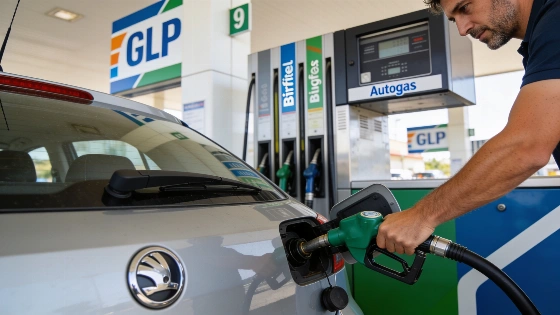
Filling up with GLP is not the same as with gasoline. Each car needs a certain nozzle, and sometimes an adapter, especially outside Spain. The pump must lock in place. Follow the station's steps closely. Safety is built in, with approved tanks and valves. But regular checks and following the maker's and ITV's rules are a must. Not all engines are good for conversion. Check if your car is a match before spending money.
Most available public data on the Spanish fuel market from the CNMC focuses on general competition and pricing for gasoline and diesel, with little direct information on the GLP segment. For accurate, up-to-date details on GLP station locations and prices, drivers should consult the official Geoportal de Gasolineras or recent releases from the Ministry for Ecological Transition.
To see if GLP really saves money, do the math. Take your real fuel use for both gasoline and GLP. Multiply by the current price. Compare the cost per 100 kilometers. If you paid to convert your car, divide the install cost by your savings per 100 kilometers. That tells you how long it takes to break even. The more you drive, the more this matters.
Before buying or converting a car to GLP, check that the change is in the car's paperwork. Make sure the tank is still valid. Keep all install and service bills. The car should start well, switch fuels without trouble, and show no warning lights. GLP systems have their own filters, injectors, and valves. Each needs care. Some engines need extra checks. Always follow the kit maker's and workshop's advice.
Long trips with GLP in Spain or Europe need even more care. Use station locators and keep a good amount of gasoline in reserve. The main plus of a bifuel car is that you can keep going if a GLP pump is closed or too far away. Before you leave, check the station's hours and if it still sells GLP. Maps can be out of date. A detour for a closed pump wastes time and fuel. Crossing borders? You may need a different adapter. Some stations have them, but don't count on it. Always check the last price update and if the pump is working before you go out of your way.
Highway coverage is spotty. Find several backup stations before you travel. Never wait until the tank is almost empty. Planning ahead is key. It can save your trip.
Not every GLP car gets the ECO label. The conversion is not enough. The car must meet DGT's rules, and the process must be fully certified and on record. If you want the ECO sticker, check the emissions standard and make sure your car will qualify after the legal steps.
GLP use is usually higher than gasoline. But the lower price per liter can still make it cheaper overall. The only way to know is to check euros per 100 kilometers, using real numbers and current prices. For converted cars, include the install cost in your math. Updated station locators, a gasoline reserve, and the right paperwork are all needed to get the most savings and avoid problems.
GLP is still a real option for Spanish drivers who are ready to do their homework. The network is not as strong as for gasoline or diesel. The rules are not the same everywhere. But with good planning, the savings can be real. Hydrogen car sales have dropped, as reported earlier, showing that practical, easy-to-find fuels like GLP matter most for daily driving. Every euro and every kilometer count. Drivers who know the details of GLP come out ahead.