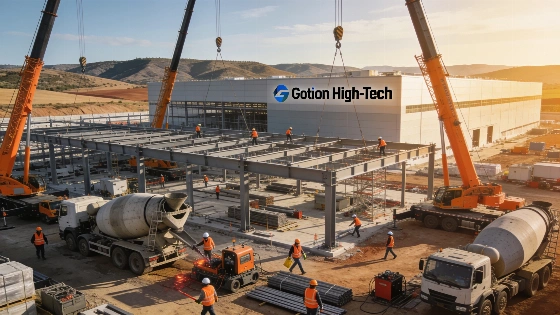
Chinese multinational Gotion High-Tech has announced plans to invest over €950 million in two battery manufacturing facilities in Valladolid, Castilla y León. Spain’s Minister of Transport and Sustainable Mobility, Óscar Puente, presented the initiative, which is intended to reshape the region's industrial field. The project was scheduled to begin operations by July 1, 2026, as part of a broader strategy to establish a comprehensive battery production chain in Spain.
Gotion High-Tech's investment will cover the company's first two installations in Spain. The facilities are designed to lay the foundation for a larger industrial plan that could reach a total value of up to €5 billion if fully realized. The announcement comes amid a broader expansion of Chinese battery manufacturing abroad: Portuguese publication Observador reported in October 2026 that Chinese battery companies had announced nearly €80 billion in overseas investment since 2023. It also reported that Gotion had announced more than €1 billion in investment in a Volkswagen partnership spanning Spain and Slovakia, with Morocco also involved.
Gotion’s scale helps explain its capacity to pursue international manufacturing. A company profile reported that it ranked fifth globally among electric-vehicle battery companies in 2025 by installed capacity, with an estimated 5% global market share, and employed 33,087 people. Volkswagen was listed as holding a 25% stake in Gotion High-Tech. Separately, industry coverage has placed Gotion within Europe’s wider battery-manufacturing buildout, noting that new factories can support manufacturing and engineering employment even as supply chains remain exposed to imports, including materials and equipment, as well as intellectual property.
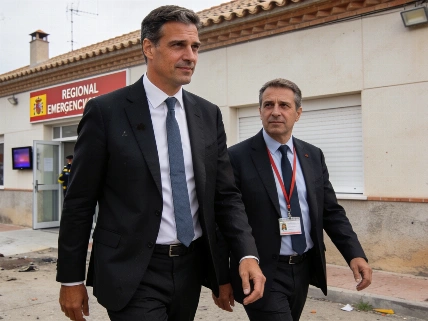
The event in Valladolid drew local and national officials, highlighting the project's significance for job creation and technological development in Castilla y León. Óscar Puente's presence at the launch signals government support for foreign investment in strategic industries. In October 2026, Valladolid’s municipal council also addressed the proposed project at an extraordinary plenary session. Local publication Valladolid Plural reported that Mayor Jesús Julio Carnero defended cooperation between administrations and said the city would work to help the project with “technical rigor and legal certainty”; the municipal PSOE called for more information about its progress and administrative steps. Spain continues to position itself as a basic player in the European battery market, amid regional debates over transport and infrastructure funding, including the dispute between Catalonia and Madrid over public transport card financing.
Gotion High-Tech's commitment is expected to have a lasting impact on the local economy, with the potential to generate hundreds of jobs and attract related businesses. The company's plan for a full production chain reflects a broader trend of industrial diversification in Spain, as regions seek to attract projects in high-value manufacturing and technology. The investment also aligns with national efforts to boost sustainable mobility and reduce dependence on imported energy components.
Valladolid was selected for the facilities in part because of the region's established industrial base and access to basic transport networks. The project is expected to strengthen Spain's position in the European supply chain for electric-vehicle batteries, supporting domestic manufacturers and export opportunities. Further investments and partnerships may follow as the sector evolves, reinforcing the country's role in the transition to cleaner energy and advanced manufacturing.