Madrid is preparing a major financial package for Ceuta after the recent migration crisis. The first 25 million euros will focus on minors, with further support planned. Local businesses and services expect targeted relief.
The Spanish government is moving quickly to address the fallout from the recent migration crisis in Ceuta, shifting its focus from emergency response to long-term recovery. Authorities are finalizing a comprehensive economic plan aimed at stabilizing the city, which has seen its credibility and daily life shaken by the influx of thousands of migrants and the resulting humanitarian challenges.
Initial measures include a 25 million euro fund, set for approval at the next Council of Ministers, dedicated to supporting unaccompanied minors in Ceuta. This funding will help finance the transfer of 500 children to the mainland, a move currently opposed by the local PP-led administration but considered essential by Madrid due to strict legal requirements for repatriation. The government has already allocated 6 million euros for immediate humanitarian needs, with further financial support expected in the coming weeks.
Beyond emergency aid, the government is developing a broader recovery package. Early estimates suggest at least 15 million euros will be directed toward reviving local commerce, including tax breaks, social security reductions, and direct compensation for lost income during the crisis. The plan also includes new tourism initiatives and additional support for ongoing projects such as desalinated water supply, reflecting the city's strategic importance as both a tourist destination and a gateway to Morocco.
Vice President Carlos Cuerpo is scheduled to visit Ceuta next week to meet with affected sectors and refine the details of the recovery plan. While the bulk of funding will be distributed gradually through a series of decrees, the upcoming ministerial meeting will be dominated by Ceuta's situation. The government aims to ensure that the extra police and Guardia Civil reinforcements—currently totaling 1,659 officers—remain in place permanently to strengthen security and restore public confidence.
Justice and health services are also under pressure. The Ministry of Justice has increased the operational capacity of the Institute of Legal Medicine by 271%, added new judicial and prosecutorial staff, and reinforced the legal aid system. Meanwhile, health authorities report that, although Ceuta is not facing a full-scale health crisis, overcrowding among migrants has led to outbreaks of diseases such as scabies, prompting further medical support.
One of the most pressing issues is border security. After the recent mass crossing, which resulted in over 100 deaths, a temporary floating barrier was installed in the water. However, this solution is not expected to withstand autumn and winter storms. Plans are underway for a more permanent engineering project to reinforce the maritime border, which will require significant investment.
Diplomatic efforts with Morocco are ongoing to prevent future incidents. Government sources highlight Morocco's intervention on August 15 to stop another mass crossing attempt organized on social media. Officials stress that, unlike the 2021 crisis, Rabat denies any political motive this time and maintains stable relations with Madrid.
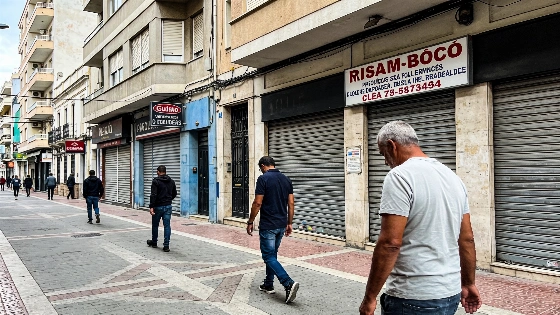
For Ceuta's residents and businesses, the impact has been severe. Tourism and commerce have plummeted, with many locals staying home and visitor numbers dropping sharply. The city, home to just over 80,000 people, has struggled to recover from the images of mass arrivals that circulated internationally, drawing commentary from figures like Donald Trump and Elon Musk. The government is determined to reverse this narrative and restore normality.
As reported in recent coverage of Ceuta's ongoing humanitarian emergency, hundreds of migrants remain in precarious conditions, and local opposition to new facilities remains strong. The current plan aims to address both immediate needs and the longer-term economic and social stability of the city.
Ceuta's crisis has become one of the most urgent challenges for Prime Minister Pedro Sánchez. The government is balancing diplomatic, security, and humanitarian responses while facing pressure from local authorities, the opposition, and European partners. The coming months will be critical in determining whether these measures can restore stability and confidence in one of Spain's most sensitive border regions.
Ceuta's unique position as a Spanish enclave in North Africa has long made it a focal point for migration and border security issues. The city's economy relies heavily on cross-border trade and tourism, both of which have suffered during the crisis. The government's multi-pronged approach—combining financial aid, legal reforms, and diplomatic engagement—reflects the complexity of the situation and the need for sustained attention at the national level.