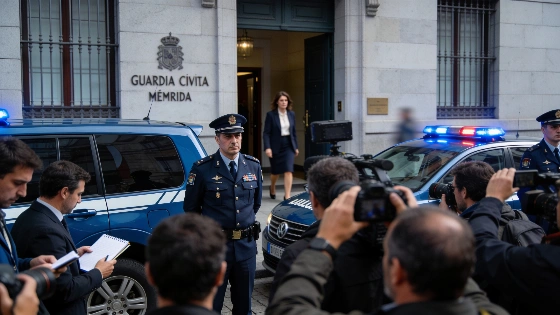
Mercedes González, head of the Guardia Civil, faces charges for alleged obstruction and misconduct. The case centers on secret meetings, internal probes, and suspected pressure on anti-corruption investigators.
The head of Spain’s Guardia Civil, Mercedes González, has been formally charged with misconduct and obstruction of justice amid suspicions of interference in high-profile corruption investigations. The move follows a series of internal probes and secret meetings that have raised questions about the independence of the force’s anti-corruption unit.
The case escalated after agents from the Unidad Central Operativa (UCO) entered the Guardia Civil’s headquarters in Madrid, acting on orders from Judge Santiago Pedraz. Their search focused on records of visitors and internal disciplinary files, particularly concerning Leire Díez, a former PSOE member now under investigation for allegedly attempting to disrupt judicial cases. While no evidence was found of Díez entering the main building, investigators did uncover three internal investigations—known as “informaciones reservadas”—opened against UCO members between January 2024 and May 2025.
According to the case file, González eventually admitted to meeting Díez twice for coffee between September 2024 and April 2025, despite earlier denials from Interior Minister Fernando Grande-Marlaska. These meetings, initially described as professional contacts, have become central to the inquiry, especially as the UCO and the anti-corruption prosecutor’s office question whether disciplinary procedures were used to pressure investigators handling sensitive cases involving the PSOE.
The first internal investigation was triggered after Okdiario published details from a confidential UCO report, including personal information about the Prime Minister’s family. The DAO, Lieutenant General Manuel Llamas, ordered the probe to clarify the leak, but the matter was closed within a month with only a verbal warning. Senior officers later told Judge Pedraz that such disciplinary actions were rare, while González insisted they were routine. The anti-corruption prosecutors, however, suspect these measures served as a form of institutional intimidation.
Further scrutiny arose from a second alleged meeting between González and Díez, inferred from a parking fine near the Guardia Civil headquarters. González denied recalling this encounter, citing other official commitments. Meanwhile, a third meeting in April 2025 was confirmed, during which Díez reportedly lobbied for the reinstatement of a commander implicated in the ‘caso Koldo’ investigation. González reported this approach to Minister Marlaska and maintained she never attempted to influence any investigation.
Internal warnings about Díez’s activities were raised by both the UCO and the Information Headquarters, who suspected a campaign to discredit investigators. Despite these alerts, González’s continued contact with Díez drew further suspicion, especially after evidence emerged of deleted messages between them.
A second internal probe was considered after leaks involving WhatsApp messages between José Luis Ábalos and the Prime Minister, but was halted by the Supreme Court judge overseeing the ‘caso Koldo’. The anti-corruption prosecutors noted the attempt to open this investigation despite a lack of evidence against UCO agents.
In late May 2025, key police commanders met with González and later with Marlaska to discuss the ongoing controversies. González claimed she had been transparent about her meetings with Díez, but this account was contradicted by other senior officers in their testimony to Judge Pedraz.
The third internal investigation was launched in September 2025 after media reports accused the DAO of political interference. This probe required detailed organizational charts and the identification of investigators working on government-related cases, but was closed a month later without findings. Prosecutors questioned the purpose of such requests, while González defended the need to protect the reputation of senior officers.
Testimony from previous Guardia Civil director Leonardo Marcos revealed further tensions. Senior officers said Marcos had pressured them to conclude investigations into the Prime Minister’s brother and to produce reports clearing him of wrongdoing. Despite these claims, Judge Pedraz declined to charge Marcos, focusing instead on González and her deputy.
The unfolding case highlights the complex interplay between Spain’s law enforcement leadership and political investigations. The outcome could have significant implications for the credibility of anti-corruption efforts and the autonomy of police units tasked with sensitive probes. The Guardia Civil, one of Spain’s oldest law enforcement bodies, has faced scrutiny in recent years over its handling of political cases, making the current proceedings especially consequential for public trust and institutional integrity.