The Guardia Civil has requested court approval to analyze the phones of three PSOE employees. The move is part of the ongoing 'Leire Díez' investigation. Two staff members have challenged the seizure, citing lack of judicial authorization.
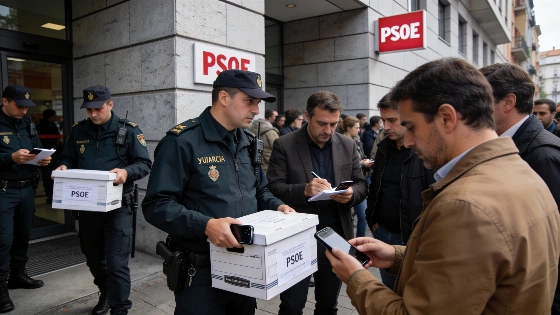
The investigation into the so-called 'Leire Díez' case has intensified, with the Guardia Civil's Unidad Central Operativa (UCO) now seeking judicial permission to access and examine the mobile phones of three key PSOE employees. The request, submitted to Judge Santiago Pedraz, targets Ana Fuentes, the party's manager already under indictment, as well as Covadonga S. P. P. and Celia R. A., both administrative staff. Their devices were seized during a major police operation in May, which included searches at the PSOE's national headquarters on Ferraz Street and the collection of internal documents.
According to the UCO, evidence points to the involvement of several individuals within the party's structure. Investigators believe that communications stored on the confiscated phones could clarify the extent of each person's participation and potentially reveal instructions from higher-ranking figures. The police emphasize that the initial seizure was a precautionary measure, with the devices held under police custody pending judicial review. Now, the UCO is asking for explicit authorization to clone and analyze the contents of these phones as the probe continues.
The National Court is examining allegations of a scheme designed to disrupt judicial proceedings affecting both the PSOE and the government. Alongside Ana Fuentes, the case implicates Leire Díez, a former party member, and Santos Cerdán, the ex-secretary of Organization, among others. The investigation describes Cerdán as the alleged ringleader, suggesting he made party resources available to the group and covered costs related to their activities. The UCO suspects that party funds were used to finance travel and meetings for those involved, with administrative staff facilitating logistics and documentation.
Central to the inquiry are claims that Ana Fuentes, allegedly acting under the guidance of Santos Cerdán and through Leire Díez, falsified professional service notes for two law firms. These documents, investigators say, were intended to simulate legitimate relationships and justify payments to lawyers Jacobo Teijelo and Ismael Oliver, both also under investigation. The judge has also linked Fuentes to the issuance of fraudulent invoices. Despite these accusations, the PSOE leadership has publicly supported Fuentes, attributing responsibility to Cerdán and maintaining that all contracts were legal and transparent. The party has similarly defended Covadonga S. P. P. and Celia R. A., who handle secretarial and administrative duties, including travel arrangements for party members.
Both Covadonga S. P. P. and Celia R. A. have filed a legal challenge against the seizure of their phones, arguing that the UCO acted without a court order and failed to notify Judge Pedraz within the required 24-hour period. Their legal brief stresses that their roles are limited to routine administrative tasks, such as booking travel or managing visitor access, always under direct instruction from superiors. They assert that such duties do not constitute criminal conduct and have asked the court to annul the confiscation.
This latest development comes as scrutiny of the PSOE's internal operations grows. The case has already drawn national attention, with previous incidents—such as María Jesús Montero's distancing from the SEPI scandal—highlighting the broader impact of the 'Leire Díez' investigation on party leadership. For example, recent coverage has detailed how top officials have faced questions over oversight and internal controls, as seen in reports on María Jesús Montero's response to the expanding probe.
In Spain, judicial investigations involving political parties often lead to heightened public scrutiny and can have significant implications for party governance and public trust. The current case underscores the legal complexities surrounding evidence collection, especially when it involves personal devices and administrative staff. As the court weighs the Guardia Civil's request, the outcome may set important precedents for future inquiries into party operations and the boundaries of police authority in political investigations.