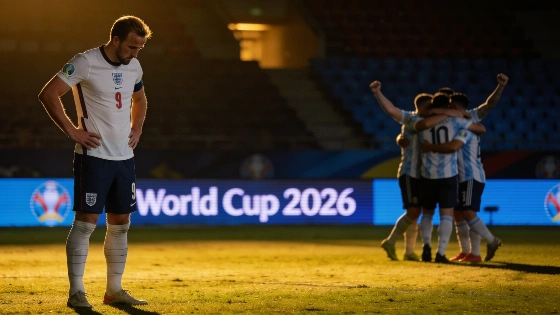
England's World Cup journey ended in the semifinals after Argentina overturned a 1-0 deficit. Captain Harry Kane expressed deep disappointment and questioned tactical decisions. The loss leaves England just short of another final.
England's hopes for a place in the 2026 World Cup final were dashed after Argentina staged a dramatic comeback in the semifinals, overturning a 1-0 deficit and sending the English squad out of the tournament. The immediate aftermath saw captain Harry Kane visibly shaken, as he addressed the press and reflected on the match's turning points and the tactical approach taken by coach Thomas Tuchel.
Kane did not hide his frustration, emphasizing the emotional toll on both players and staff. He noted that England had controlled much of the game, especially after taking the lead, but admitted that simply defending the advantage was not enough at this level. According to Kane, the team struggled to maintain pressure on Argentina, particularly after the opening goal, which allowed their opponents to gain momentum and eventually reverse the scoreline.
The England captain highlighted the difficulties in pressing effectively, especially as the match wore on. He pointed out that while the team managed to disrupt Argentina's play in the first half and early in the second, the intensity dropped after going ahead. This shift, Kane suggested, left England vulnerable to repeated attacks and ultimately cost them control of the match.
After Argentina equalized and then took the lead, England found it increasingly difficult to regain composure and dictate play. Kane acknowledged that the squad had been instructed to keep attacking and seek a second goal, but the momentum had already shifted. The inability to respond decisively in the final stages left England with little chance to recover.
Reflecting on the broader tournament, Kane pointed to several strong performances and the achievement of reaching another semifinal. However, he also recognized that coming close to the final without securing a place remains a source of frustration for the team and supporters alike. The World Cup's demands, he said, test every aspect of a squad's resilience and mental strength, and England had shown plenty of both during their campaign.
England's exit comes amid ongoing debates about tactical decisions and game management at the highest level. The choices made by Thomas Tuchel, particularly after taking the lead, have drawn attention both in the UK and internationally. This theme of high-stakes football drama has been a recurring one in recent weeks, as seen in other major tournaments such as the Wimbledon final between Sinner and Zverev, where momentum and strategy played decisive roles—an analysis explored in detail in this recent report.
For context, England's repeated appearances in the latter stages of major tournaments over the past decade have raised expectations among fans and analysts. The 2026 World Cup semifinal loss continues a pattern of near-misses, with the team often falling just short of the ultimate prize. The focus now shifts to the future of the squad and the potential for changes in approach ahead of upcoming international competitions. As the dust settles, the debate over tactical risk versus defensive caution is likely to remain central to discussions about England's prospects on the world stage.