HEINEKEN Spain has finished converting all its breweries to 100% renewable electricity and heat, using solar, biomass, and biometano. The company says this move supports 1,400 direct jobs and 85,000 more across its supply chain. The transition marks a milestone for Spain’s beverage industry.
On December 1, 2025, HEINEKEN Spain reached a milestone: all four of its breweries—located in Seville, Madrid, Valencia, and Jaén—now operate entirely on renewable electricity and thermal energy. This transformation, which the company says supports 1,400 direct jobs and an estimated 85,000 indirect and induced positions, marks a new chapter for Spain’s beverage sector.
The company’s 2025 sustainability report, released in 2026, presents HEINEKEN as the first major brewer in Spain to produce its entire range of beers, ciders, and summer reds using only renewable energy. The report details a process verified by EY under ISO 14021 standards, with non-financial data checked by AENOR. According to the company, this shift is not just about energy—it’s about setting a new standard for the industry.
From Biogas to Biometano
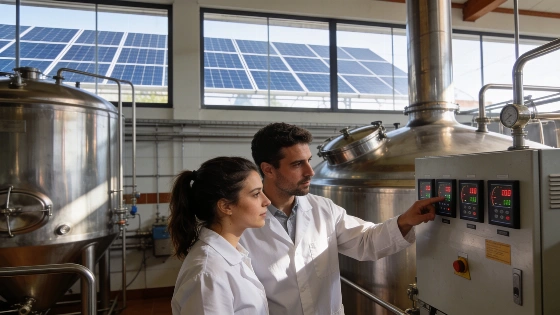
The journey began in 2007, when HEINEKEN started capturing biogas from its wastewater treatment plants. By 2020, the El Andévalo solar facility in Huelva was supplying renewable electricity. Jaén’s brewery added a biomass boiler in 2021, Seville launched an industrial-scale solar thermal plant in 2023, and Valencia installed Fresnel technology in 2024. The final step came in 2025, with the introduction of biometano—a renewable gas—completing the transition.
While renewable electricity had powered the breweries since 2020, the real challenge was replacing the thermal energy needed for industrial steam. Solar thermal, biomass, and biometano now cover this demand, allowing HEINEKEN to declare its energy transition complete by the end of 2025. This mirrors the kind of agricultural innovation seen in other Spanish regions, such as the rapid expansion of pistachio farming in Castilla-La Mancha, as highlighted in this recent report.
Water and Waste: Beyond Energy
HEINEKEN’s sustainability efforts extend beyond energy. In 2025, the company returned 2.9 billion litres of water to river basins near its breweries, through projects in Doñana, the Albufera of Valencia, and the Jarama basin. This figure nearly doubles the water volume contained in its beverages and far exceeds its corporate target of 1.5 billion litres. Water use per litre of beer dropped to 2.68 litres in 2024, a 45% reduction since 2008.
All four breweries now hold Zero Waste to Landfill certification. The company reports that 98.7% of industrial waste is recovered, all by-products are reused in other industries, and 86% of hospitality packaging is reusable. Spent barley, for example, is repurposed in line with circular economy models common in Spain’s agri-food sector.
Innovation and New Products
The energy transition coincides with a period of product innovation. HEINEKEN Spain invested €5 million in innovation over the past three years, launching more than 60 new products in 15 years—seven of them in 2026 alone. The focus is on alcohol-free options, new flavours, and premium segments. All four strategic brands—Heineken, Amstel, Cruzcampo, and El Águila—now offer 0.0 alternatives. Recent additions include Cruzcampo Tostada 0,0, Ladrón de Manzanas 0,0, El Águila Sin Filtrar Limón, and Cruzcampo 1904. According to NielsenIQ data cited by the company, the premium lager category grew by 4.4% in value and 5.2% in volume in Spanish households, with growth among under-35s nearing 13%.
Employment and Social Impact
HEINEKEN’s employment figures vary depending on the scope. The company’s website lists 1,400 direct employees and 85,000 indirect and induced jobs linked to its Spanish operations. The 2025 report raises the direct figure to 2,043 when including in-house distribution. The 85,000 figure reflects the broader impact across suppliers, agriculture, logistics, distribution, and hospitality. In November 2025, Talent24h reported on new job openings at the Seville and Jaén breweries, though these were part of a specific recruitment drive.
Socially, women now hold 44% of management roles, and all team leaders have received training in inclusive practices. The company also reports regular pay equity reviews, 2,015 hours of safety training, and 88% of raw materials sourced locally. The Fundación Cruzcampo continues to support youth training and professional development in hospitality.
For those seeking more detail, the full 2025 sustainability report is available on the HEINEKEN España website.