Criminal networks are transforming vehicles with secret compartments to move cocaine undetected from Andalucía to northern Europe. The Costa del Sol now anchors a sophisticated web of trafficking, with routes shifting as police pressure mounts.
When Spanish police intercepted a convoy speeding at 200 kilometers per hour toward Catalonia, they discovered more than just reckless driving. Inside the vehicles, hidden compartments—some equipped with automated opening systems—concealed hundreds of kilos of cocaine. This was part of a meticulously organized operation stretching from the beaches of Huelva to the streets of Frankfurt.
These incidents are part of a broader pattern. The Costa del Sol has become the logistical hub of Europe’s cocaine trade, coordinating shipments and storage for criminal organizations operating across the continent. The region’s appeal lies not only in its coastline but also in its infrastructure: luxury villas for short-term stays, a steady supply of rental vehicles with foreign plates, and a network of trusted mechanics skilled at transforming ordinary cars into nearly undetectable drug carriers. According to reports from El Confidencial and La Vanguardia, a recent police operation dismantled a network that moved over 2.7 tons of cocaine from the Costa del Sol to Barcelona, seizing 29 luxury vehicles, crypto assets, and other property.
In a separate operation near Seville, authorities intercepted 1,238 kilos of cocaine hidden in a shipment of coconuts, demonstrating that traffickers are also using cargo transport and not just modified cars.
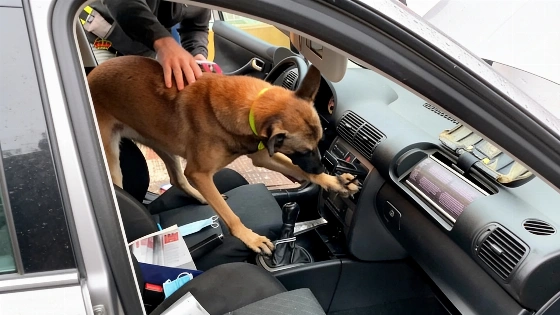
Finding a reliable workshop is a challenge for any car owner, but for criminal syndicates, the stakes are far higher. Specialized garages are proliferating, offering modifications that range from simple double floors to sophisticated, remote-controlled compartments. These upgrades allow traffickers to split large shipments into smaller, less risky loads—typically no more than 300 kilos per vehicle. The result is a fleet of “caleteados”—cars with hidden spaces—crisscrossing Spain and heading north, their illicit cargo invisible to the naked eye and often detectable only by advanced scanners or trained police dogs.
Once cocaine arrives on Spanish shores—often via high-speed narcolanchas—bulk shipments are quickly broken down and distributed. The logistics are ruthlessly efficient. Organizations based in the Costa del Sol coordinate pickups from Huelva, Granada, or Almería, then dispatch the drugs to Madrid, Levante, Catalonia, or directly across the border into France and beyond. The recent dismantling of an Albanian mafia cell, which managed to move 2,785 kilos of cocaine in just two operations, highlights the scale and reach of these networks. One load of 1,434 kilos was seized in Estepona, while another surfaced in a Barcelona suburb. As reported by The Olive Press, police found 1,351 kilos of cocaine hidden in a garage in Sant Just Desvern, confirming the use of secret compartments in both vehicles and real estate.
Law enforcement pressure is forcing traffickers to diversify. The traditional stronghold of Campo de Gibraltar is no longer the sole entry point. Authorities now report increased activity along the coasts of Granada and Almería, with the latter seeing a 287% jump in cocaine seizures—1,255 kilos in 2025 compared to 324 the previous year. Narcolanchas are refueling and offloading in new locations, and the organizations behind them are often distinct from those handling inland distribution. The business relies on alliances, subcontracted services, and a constant search for weak spots in the system.
Recent investigations confirm that the use of hydraulic hidden compartments, or 'caletas', in vehicles is a growing trend. In a 2026 case on the Barcelona–Menorca route, police arrested 11 people and seized more than 6 kilos of cocaine and 7 modified cars, highlighting the spread of this concealment method beyond Andalucía.
Much of the vehicle fleet used for these operations comes from phantom rental companies across Europe. Spanish highways are now crowded with cars bearing German, Polish, Hungarian, or Slovak plates. These vehicles, often registered to shell companies, are cycled through workshops where mechanics—some knowingly complicit, others perhaps less aware—install the latest concealment technology. The sophistication of these modifications is a direct response to police tactics, as criminal groups invest heavily in both logistics and secure communications.
While the Costa del Sol is the operational hub, the network stretches across Andalucía. Huelva serves as a frequent landing point, with drugs quickly moved to safe houses or industrial warehouses before being dispatched further inland or abroad. The infrastructure is so robust that traffickers do not need to control the exact point of entry; what matters is the ability to take charge of a shipment as soon as it reaches Spanish soil. This flexibility makes the region indispensable to international mafias. According to La Vanguardia, police in Jerez have also uncovered cocaine hidden in electrical boxes inside homes, showing that concealment tactics are now common even at the retail level.
Spanish authorities have responded with targeted crackdowns, but the adaptability of these networks remains a challenge. As noted in a recent report, the movement of goods—licit or otherwise—relies on the same logistical strengths that make Spain a magnet for global business. In the world of narcotics, speed and secrecy are paramount.
The transformation of Andalucía into a sprawling logistics platform for cocaine is not just a story of criminal ingenuity. It is a warning about the limits of enforcement when infrastructure, technology, and international collaboration are leveraged by those willing to exploit every loophole. The Costa del Sol’s role as Europe’s drug warehouse is the result of calculated investment, relentless adaptation, and a region whose assets have been repurposed for the underworld’s gain. Until authorities can disrupt not just the shipments but the entire logistical ecosystem, the cocaine will keep moving—and the cars will keep rolling north.