A Spanish traffic lawyer explains why the presence of another car or motorcycle in a speed camera photo can be grounds to challenge a speeding fine. The right approach could save both your money and license points.
When a speed camera flashes, most drivers assume the resulting fine is inevitable. Yet, according to Spanish lawyer Javier López, there is a significant legal vulnerability that many overlook: if a second vehicle—whether a car or a motorcycle—appears in the same radar photo, the penalty may not stand up in court.
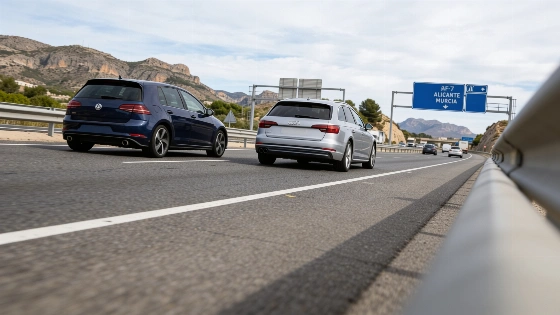
The technical and legal basis for this argument lies in Spain’s strict metrology regulations. Certified speed cameras are required to provide clear, unambiguous evidence of which vehicle exceeded the limit. If two vehicles are captured side by side or within the same measurement zone, it becomes technically impossible to prove beyond doubt which one triggered the violation. This creates a substantial evidentiary gap.
If the radar image shows both a car and a motorcycle in the frame, there is immediate reasonable doubt about who was actually speeding.
López emphasizes that the burden of proof rests entirely with the authorities. Spanish administrative law upholds the presumption of innocence, meaning any sanction must be supported by full and unequivocal evidence. If the radar image shows both a car and a motorcycle in the frame, there is immediate reasonable doubt about who was actually speeding. Without the ability to isolate each vehicle’s speed, the fine lacks the legal certainty required and should be annulled.
To use this defense, López advises drivers not to pay the fine immediately, as early payment is considered an admission of guilt and waives the right to appeal. Instead, request the full sanction file, including the original, uncropped radar photo. Traffic authorities often send only a zoomed-in image showing the license plate, but drivers have the legal right to demand the complete panoramic shot to verify the circumstances.
Once you have the full image, check for the presence of another vehicle. If confirmed, submit a detailed written appeal citing the violation of metrology standards and the lack of certainty in assigning the speeding offense. The argument is that the measurement could have been affected by the adjacent vehicle, making it impossible to attribute the infraction to a single driver. Spanish law requires absolute precision, so any ambiguity in the evidence should work in the driver’s favor.
Legal experts estimate that this strategy succeeds in 70% to 80% of cases, especially with traditional radar systems that cannot distinguish between vehicles. However, newer Lidar or multi-lane cameras may be able to identify individual speeds, so the effectiveness of the appeal depends on the technology used. The key is to insist on the full panoramic image and complete technical documentation, ensuring that any reasonable doubt is resolved in favor of the driver.
This approach highlights the importance of carefully reviewing all evidence before accepting a traffic penalty. Even a routine overtaking maneuver or a motorcycle passing alongside at the moment of the radar flash can become a decisive factor in overturning a fine, protecting both your finances and your license points.
It’s worth noting that Spanish traffic law has become increasingly strict in recent years, not only for speeding but also for other infractions. For example, improper parking can now result in fines of up to €500, as detailed in this recent analysis of new parking regulations. As enforcement tightens, understanding your rights and the technicalities of traffic law is more important than ever.
In summary, if you receive a speeding ticket and notice another vehicle in the radar photo, do not rush to pay. Request the full evidence, examine it closely, and consider a formal appeal. In many cases, this overlooked detail can make all the difference.