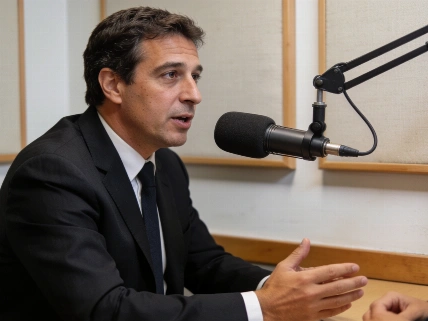
Captain Francisco Javier Gimeno Benito-Sendín reveals how Spain’s Canadair crews fight wildfires without automated targeting. Every drop is calculated by experience, wind, terrain, and close coordination with ground teams. The story follows intense operations in Madrid and Ávila.
When wildfires erupted across Madrid and Ávila this summer, Captain Francisco Javier Gimeno Benito-Sendín and his team from the 43 Grupo were among the first in the air. Flying Canadair water bombers, they faced flames of what Gimeno described as “enormous magnitude”—and did so without the help of automated targeting systems.
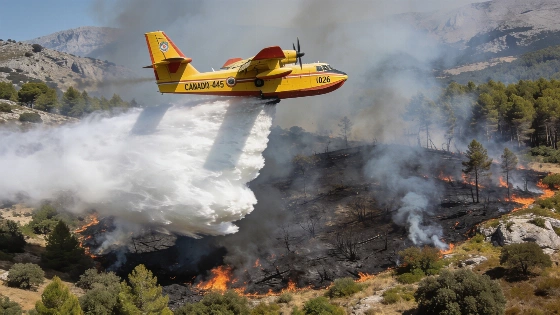
Unlike modern aircraft equipped with digital aiming, the Canadair relies on the skill and judgment of its crew. Each water drop—up to 6,000 liters at a time—is calculated in real time. Pilots must read the wind, assess the slope of the terrain, and anticipate the movement of the fire. “We don’t have any aiming system,” Gimeno explains. “Everything depends on experience, the wind, the slope, and the guidance from the ground.”
Precision Without Automation
As the aircraft approaches the fire, the crew constantly adjusts their trajectory. They watch the direction of the smoke, the advance of the flames, and the contours of the land. The final decision—when to release the water—comes down to a split-second judgment, often coordinated by radio with ground teams. An aerial coordinator manages the flow of helicopters and fixed-wing planes in a tight airspace, much like an airport, but over a landscape that is constantly changing.
The goal is not just to douse the flames, but to weaken the fire’s front and give ground brigades and forest firefighters a chance to intervene. Careful timing also ensures that multiple aircraft can operate in sequence without overlapping, maximizing the impact of each sortie.
Meticulous Mission Planning
Preparation begins long before takeoff. Pilots and flight engineers study the fire zone, map out routes, and identify reservoirs for water collection. They review NOTAMs—aviation notices that flag hazards or restrictions along the planned path. Aircraft are kept ready from early morning, allowing crews to launch as soon as they are activated. This planning is crucial: if a reservoir becomes unsafe, the team must have alternatives ready.
Local weather becomes even more critical as the plane nears the fire or water source. Wind shifts, sun glare, and bird activity can force last-minute changes. Over the fire, visibility drops and turbulence increases. The Canadair is built for these conditions, but the crew must constantly weigh risk and maintain a safety margin. Their work is closely integrated with Spain’s broader wildfire prevention and ground response efforts.
High-Risk Water Collection
One of the most dangerous moments comes during water collection. The Canadair, with a wingspan of about 30 meters, skims across a reservoir to fill its tanks. Before each maneuver, the crew checks water conditions, wind, obstacles, and birdlife. Depending on the model, the aircraft can carry between 5,500 and 6,000 liters, released in a single drop or in stages. The 43 Grupo operates 14 such planes, staffed by 145 military personnel on year-round alert.
After loading, the aircraft returns to the fire and re-enters the coordinated attack sequence. During the Madrid and Ávila operations, Spanish crews worked alongside four CL-415 planes from Italy and Greece, deployed through the European Civil Protection Mechanism. The proximity of reservoirs like San Juan and El Burguillo allowed for rapid rotations and frequent drops.
Relentless Operations and Hidden Effort
According to the latest figures, the 43 Grupo operated for 37 consecutive days between June 22 and July 28. In that period, they carried out 269 aerial missions, made over 3,000 drops, and released more than 18 million liters of water. On the busiest day, they completed 215 drops—over 1.2 million liters in a single shift. This pace is only possible thanks to the ground crews: mechanics, specialists, and support staff who inspect, repair, and prepare each aircraft for the next sortie.
Gimeno notes that while pilots are visible, the ground teams are the backbone of the operation. The emotional toll is real—witnessing vast stretches of burned land while defending homes, fields, and natural reserves leaves a mark on everyone involved.
For those interested in the full interview and official mission statistics, both are available through the Spanish Air and Space Force. The story of the 43 Grupo is a testament to the precision, coordination, and resilience required to fight Spain’s wildfires from the air.