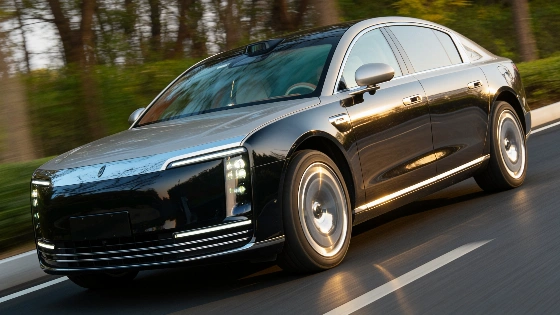
Huawei and JAC have brought the Maextro S800, a 5.48-meter electric sedan, to Chinese showrooms, drawing attention in the luxury car market. Some reports claim it outsold the combined flagships of Audi and BMW, as well as those from Mercedes, Maybach and Porsche, in China within six months. Those figures have not been independently confirmed. Industry analysts say the claims rely on unverified sources and lack support from official Chinese registration data or primary sales reports.
The S800 stands out for its size, illuminated trim and star-patterned headlights. It takes direct aim at the Mercedes Clase S, seeking to match its comfort and technology at a lower price. In China, the base S800 starts at about €86,000, while the top version reaches €124,000. Both prices undercut established European rivals. Maextro, a premium joint venture between Huawei and JAC, calls the S800 its first major release. Industry publications have also described it as a showcase for Huawei’s technology in the ultra-luxury segment and the new premium brand’s first impressive product.
Electrically operated rear doors open onto an interior finished in lacquer and leather. With a 3.37-meter wheelbase, the S800 gives rear passengers more legroom than many first-class airline cabins. Standard features include heated, massaging rear seats. The right-side seat reclines nearly flat, while fold-out tables and climate-controlled compartments for food and drinks add to the cabin’s amenities. A 40-inch screen mounted on the ceiling handles in-car movies. The roof features programmable LED constellations and shooting stars.
The S800 comes with a choice of two electric motors producing 530 CV or three motors producing 863 CV. Both configurations use a 97 kWh battery, with up to 700 kilometers of range and charging speeds close to 400 kW. Those are strong specifications, though the car is less powerful than the Lucid Air and Porsche Taycan. It accelerates from 0 to 100 km/h in 4.6 seconds and reaches a top speed of 240 km/h, putting it in the upper-middle tier of electric performance sedans. A version with a range extender, a four-cylinder generator, offers more than 1,300 kilometers of range. Some buyers, but, may not want a combustion engine, even as a backup.
Software is another basic feature. Huawei’s autonomous driving system can keep the car in its lane and change lanes, handle intersections and roundabouts, then make left turns across traffic with little driver input. In heavy city traffic, the driver can take their hands off the wheel while the car manages the situation. The S800’s sideways “crab walk” parking maneuver has already gone viral on Chinese social media.
Reuters reported that Huawei and JAC are in advanced talks with Maserati about jointly developing and producing cars that use Huawei technology. One option under discussion is dual branding: Maextro for China and Maserati for overseas markets. The first joint vehicle is tentatively expected in late 2027.
For buyers used to the understated styles of Mercedes or Maybach, the S800’s bold design and illuminated accents may seem over the top. The Chinese market has responded well: 10,000 units were delivered in less than six months. Demand for comfortable, high-tech sedans is clear, and the S800’s quick uptake points to a shift in the global luxury car market. Several industry reports cast its sales as part of a broader trend: Chinese tech companies such as Huawei are raising the bar while putting pressure on traditional luxury brands. Official sales records, but, have not been confirmed.
European brands have long led the conversation on electric new idea, but recent real-world tests, including the Kia EV5’s struggles in cold weather, show the challenges they face. Huawei’s emphasis on digital features and passenger comfort, alongside the car’s power, could make the S800 an option for a new generation of luxury buyers. Sector analysts often cite the Maextro S800 as evidence that China is moving from follower to trendsetter in the premium electric vehicle market.
Huawei and JAC spent five years developing the Maextro S800, a timeline more typical of German brands than the pace of most Chinese launches. The resulting sedan matches Western competitors in comfort and technology, while its value in some respects surpasses theirs. The Maextro S800 challenges the Mercedes Clase S and established ideas about what a luxury sedan can offer, from software to design. German dominance in luxury cars is no longer a given.