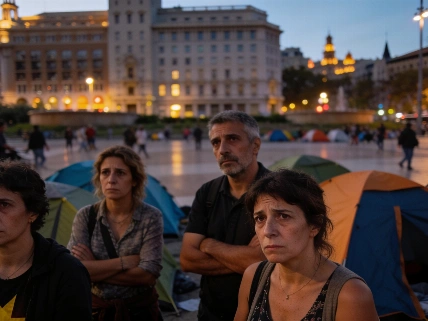
Trampolín Beach in Ceuta now shelters hundreds of migrants left in limbo. With official centers full, many face harsh sun and scarce resources. Police and NGOs struggle to manage the growing humanitarian challenge.
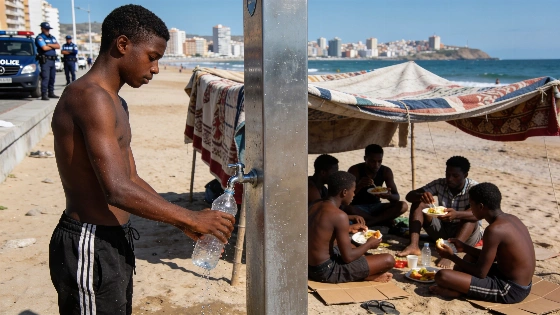
Trampolín Beach in Ceuta has transformed into an open-air refuge for around 400 migrants, most from sub-Saharan Africa, who remain stranded as they wait for a response to their asylum requests. The official migrant center in the city is at capacity, forcing many to seek shelter on the sand, exposed to the relentless August heat and with limited access to basic necessities.
Police have identified the area as one of the city's main hotspots, not only due to the soaring temperatures but also because of the growing number of people gathering there. Migrants use blankets from the Red Cross and makeshift shelters of cardboard and fabric to shield themselves from the sun. Among them are families, such as a group from the Comoros Islands, who recount their journey through Mayotte and Morocco before reaching Ceuta. Many have lost their money and belongings during the crossing, and now struggle to find food, water, and even basic hygiene products.
NGOs have stepped in to provide food and water, but resources remain scarce. Migrants like Jon, a 23-year-old from Nigeria, rely on sporadic aid and hope for the reopening of beach showers to refill bottles, even if the water is not potable. Communication with families back home is limited, with many desperate for internet access to reassure relatives of their safety.
Media attention has intensified, with international television crews broadcasting live from the beach. Migrants often wait silently behind reporters, sometimes breaking their silence to share their stories or express frustration. The situation is further complicated by personal tragedies, such as that of Khaled from Yemen, who lost his brother during the dangerous swim to Ceuta and has been unable to confirm his fate with authorities or aid workers.
Despite the uncertainty, the word "asilo"—asylum—echoes across the beach. Many migrants learned through WhatsApp groups that the border between Morocco and Spain was open, prompting their attempt to cross. While some regret the decision, most remain determined to seek asylum in Spain, aware that their legal status prevents immediate deportation. However, the lack of clear information on procedures leaves them in a state of limbo, confined to the beach and dependent on sporadic assistance.
Occasionally, small groups venture into the city in search of food, often facing restrictions in local shops. Shopkeepers require migrants to show cash before allowing entry, and purchases are limited to basic items like bread and fruit. In contrast, local residents shop without such barriers, highlighting the divide between migrants and the rest of the community.
Elsewhere in Ceuta, the situation has shifted. The previously crowded El Tarajal beach near the border is now calm, with reduced military presence. Local youths search the water for remnants of the recent mass crossing, finding mostly discarded clothing—a stark reminder of the perilous journey that claimed at least 114 lives. For a broader perspective on the ongoing crisis and its impact on Ceuta, see this recent report on the city's response to the migrant influx.
Ceuta's unique position as a Spanish enclave on the African continent has long made it a focal point for migration. The current crisis underscores the challenges faced by both authorities and humanitarian organizations in managing sudden surges of arrivals. Overcrowding in official centers, limited resources, and the legal complexities of asylum procedures contribute to the prolonged uncertainty for those stranded on the beaches. The situation at Trampolín Beach highlights the urgent need for coordinated action and sustainable solutions to address the humanitarian needs of migrants and the pressures on local infrastructure.