Hyundai has suffered the steepest sales decline of any car brand in Spain this year, falling from fifth to eighth place as Chinese SUV makers seize market share and buyers turn away from its small cars and SUVs.
September 2026 brought a shock for Hyundai in Spain. The brand registered only 3,013 vehicles. That’s a 31.6% drop from the same month last year. The rest of the market grew by 10.2%. Hyundai’s fall was the worst among all major carmakers. ANFAC’s official data shows this plunge happened even as total registrations climbed. The problem isn’t a weak market. It’s tougher competition and buyers changing their minds.
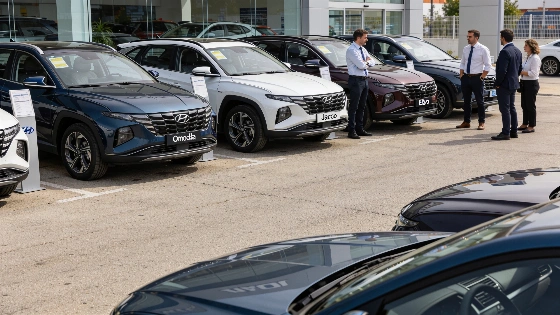
Why did Hyundai stumble? Two reasons stand out. First, buyers have been waiting for the new Tucson. That pause drained sales from Hyundai’s top model. Second, Chinese SUV brands—Omoda, Jaecoo, and Ebro—have stormed in. They’ve taken thousands of customers Hyundai once counted on. Recent industry reviews confirm it: Hyundai is no longer in Spain’s top five. The challenge is real.
In September 2026, Ebro sold 2,096 vehicles in Spain, marking a 76% year-on-year increase and positioning itself as a key driver of the Chinese brands' surge.
Market shake-up
Last year, Hyundai was Spain’s fifth most popular car brand. It sold 48,809 units from January to September 2025. Now, sales have dropped to 39,807. That’s an 18.4% fall. Hyundai has slipped to eighth place. The brand lost 9,002 sales—more than Renault and Ford combined in the same period. Its market share shrank from 5.7% to 4.4%. EL ESPAÑOL-Invertia reports Chinese brands grew by 65.5% in the first nine months of 2026. They reached 153,204 units. The market looks different now.
The biggest hit came in Hyundai’s small cars. The i10, once everywhere in Spanish cities, lost 80% of its sales this year. It dropped from over 4,000 units to just 800. The i20, Bayon, and Inster also fell hard. Together, they make up nearly 80% of Hyundai’s lost sales. In September, these models lost 680 units—half of Hyundai’s monthly drop. Analysts say Hyundai feels the most pressure in compact and SUV segments. Chinese brands and electrified models are in high demand there.
Chinese brands on the offensive
Chinese SUV makers are gaining fast. Omoda, Jaecoo, and Ebro nearly doubled their combined sales in Spain over the past year. In September, they registered 6,106 vehicles. Their market share jumped from 3.9% to 6.5%. So far this year, these three brands have sold 49,563 cars. That’s more than Hyundai. This isn’t a fluke. Chinese automakers now have a direct presence in Spain, changing the rules of the game. Market overviews using ANFAC data show Omoda sold 2,394 vehicles in September, up 115.9%. Jaecoo added 1,616 units, up 64.2%. Both are digging in.
Chinese brands are not only growing thanks to SUVs, but also due to their strong lineup of hybrid and plug-in hybrid models, which have become a key factor in their success in Spain’s increasingly electrified market.
Hyundai’s timing couldn’t be worse. The new Tucson was just unveiled yesterday. It’s Hyundai’s main hope for a comeback. The outgoing Tucson is still the only Hyundai in Spain’s top ten. But even it dropped 20.2% in September, with just 1,108 units sold. Hyundai is counting on pent-up demand for the new model. The pressure is on.
Winners and losers
Hyundai’s problems go beyond SUVs. The i30, once steady, fell 59.4% in September. The Ioniq electric range is growing, but from a tiny base. All four Ioniq models together sold just 93 units last month. That’s only 3% of Hyundai’s total.
Meanwhile, Omoda, Jaecoo, and Ebro grabbed almost half of the market’s year-on-year growth. They added 26,305 units between them. Other brands like BYD, Leapmotor, and Mazda are also moving up. Hyundai is getting squeezed. The rest of the market grew by just 0.8% this year.
Unanswered questions
Official stats don’t show if Hyundai’s losses are mostly from private buyers, fleets, or rentals. It’s also unclear how much the shift to electrified cars—now a third of the market—has hurt Hyundai. One thing is clear. Hyundai’s image as an affordable, well-equipped Korean choice has faded. Prices are up. Market share is down.
The new Tucson is now in showrooms. Hyundai faces a big test. If the model sparks demand, the brand might stop the slide before year’s end. If not, Hyundai could fall even further behind. Chinese rivals are not slowing down. The numbers tell the story. Spain’s car market is changing fast. Hyundai’s next steps will decide if it stays in the game or becomes a warning for others.