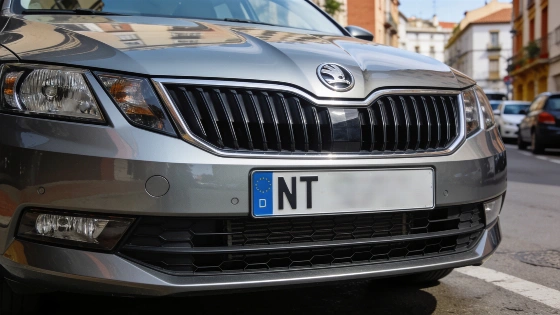
Spanish car registrations in October now feature the next NT letter combinations. The DGT’s system remains unchanged, but the evolving sequence offers clues to a vehicle’s age and history. Here’s what drivers need to know about the latest plates.
October brings a new look for Spanish license plates. Drivers picking up new cars this month will spot the NT series on their plates. The last days of September finished around NTB. There’s no big change behind this. The Dirección General de Tráfico (DGT) has kept the same system. No one needs to swap out old plates. The only shift is the steady roll forward as new cars get registered.
Every Spanish plate still shows four numbers and three letters, all under the blue EU band. The letters move up in order. But the speed depends on how many cars get registered, not the month. There’s no official “October plate.” The sequence just keeps going from where September ended. On any given day, two cars might get different combinations. The jump from NTB to NTC happens quietly. No fixed date marks the change.
In September 2026, Spain registered 93,858 new passenger cars—a 10.2% increase year-on-year, marking the strongest September for the market in nearly two decades.
Curious about what your plate says? The system gives a rough idea of a car’s age. Since 2000, Spain has used this format. Some letters—A, E, I, O, U, Ñ, Q—are skipped to avoid confusion or awkward words. So the sequence isn’t a full alphabet run. Still, you can estimate when a car was registered. But remember, the plate only shows when the car was registered in Spain. It doesn’t reveal the year it was built or if it was first registered abroad.
Some drivers worry a new series means they must update their plates. That’s not true. The DGT says there’s no need to change your registration just because the sequence moved forward. Only special cases—like certain imports or legal reasons—require a new plate. For most people, the original plate stays valid for the car’s whole life.
According to official DGT data, the Spanish license plate system has remained unchanged since 2000, with no provincial codes and a consistent 4-digit, 3-letter format. The next major letter—P—is not expected to appear until late 2026 or early 2027, depending on continued market growth.
Historic vehicles follow their own rules. These cars get plates starting with H, then four numbers and three letters. That sets them apart from regular cars. Other exceptions exist too. Temporary, diplomatic, and commercial vehicles each have their own formats.
The speed at which each three-letter combo runs out depends on car sales. High demand months burn through combinations fast. Slow months stretch them out. That’s why you can’t link a specific plate to a certain month. One thing is clear. As of October, the NT series is active. The exact letters you get depend on your registration day.
For used car buyers, the plate is more than a random code. It’s a clue for checking a car’s history. The DGT offers official reports tied to the registration. Buyers can check details before making a deal. This makes the plate system more than a formality. It’s a tool for transparency in the used car market.
Recent changes in Spain’s car industry, including those affecting major brands and their future plans, have been covered in previous reports. These stories show how industry shifts can touch everyday things like license plates.
The move to the NT series is routine. No new rules. The DGT’s system stays the same. Drivers just get the next available combination. For anyone tracking Spanish plates, NT is simply the latest step. These codes help identify, check, and trace a car’s life. It’s a quiet but important part of Spain’s roads.