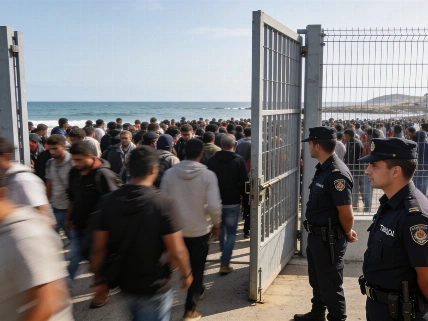
Ibiza faces a surge in unauthorized villa parties drawing huge crowds. Residents report sleepless nights and demand stronger action. Local authorities struggle with legal barriers and jurisdiction disputes.
Authorities in Ibiza are under mounting pressure after a massive illegal party drew more than 1,000 attendees to a rural property in Sant Antoni de Portmany. The event, held on June 10 at a finca along Camí Vell de Sant Mateu, featured multiple bars, restaurant areas, medical staff, and even a carousel—yet operated without a single official permit. Security guards, shuttle buses, and wristband systems gave the gathering the appearance of a legitimate festival, but it was quickly shut down by local police and the Guardia Civil following a flood of noise complaints and reports of traffic chaos from nearby residents.
This incident is part of a growing trend on the island, where increasingly elaborate and well-organized clandestine parties are promoted through social media and private messaging. Residents say the problem has escalated in recent years, with events now rivaling licensed festivals in scale and sophistication. Many locals, especially in rural communities like Santa Gertrudis, report that the powerful sound systems used at these gatherings can be heard for kilometers, disrupting sleep and daily life during the busy summer months.
Community leaders are voicing frustration over what they see as insufficient municipal action. In Sant Antoni de Portmany, neighborhood association president Vicent Riera criticizes the town hall for waiting until formal complaints are filed before intervening, arguing that authorities should act proactively. He points to a broader pattern of lax enforcement on issues ranging from illegal taxis to waste management and water shortages.
Santa Gertrudis residents have delivered over 300 signatures to their local council, demanding a clampdown on these disruptive parties. Joan Tur Rosselló, head of the local neighborhood association, describes a sense of being pushed out of their own community as rural areas become targets for commercialized, unauthorized events. The local government in Santa Eulària acknowledges the problem but cites legal obstacles: organizers often claim constitutional protections of private property to block police entry, disguising commercial operations as private gatherings.
Mayor Carmen Ferrer has appealed to the Balearic Government Delegation for support, requesting a special Security Board meeting and clearer directives for the Guardia Civil, which holds jurisdiction over rural security. She argues that local police alone cannot manage events of this scale and calls for coordinated action across all levels of government. However, the Delegation maintains that primary responsibility lies with the municipality, noting that Santa Eulària has not yet formally requested Guardia Civil assistance or convened the Security Board.
In response to the recent Sant Antoni incident, the town hall has initiated sanction proceedings against the organizers, who now face a potential €300,000 fine for violating activity regulations. The ongoing jurisdictional dispute and legal loopholes, however, leave many residents skeptical about the prospects for lasting change.
Ibiza's struggle with unauthorized gatherings echoes broader challenges faced by Spanish communities balancing tourism, local quality of life, and enforcement capacity. Similar tensions have surfaced elsewhere, such as during major public emergencies when local and national authorities debate responsibility and resources, as seen in the recent response to natural disasters in Venezuela.
Ibiza remains one of Spain's most popular tourist destinations, with its nightlife drawing visitors from around the world. The proliferation of illegal parties not only strains local services but also raises questions about the effectiveness of current regulatory frameworks. As the summer season intensifies, the island's authorities face renewed calls to protect residents' rights while managing the demands of a booming tourism sector. The outcome of these disputes may set important precedents for how similar issues are handled across Spain's other high-profile holiday regions.