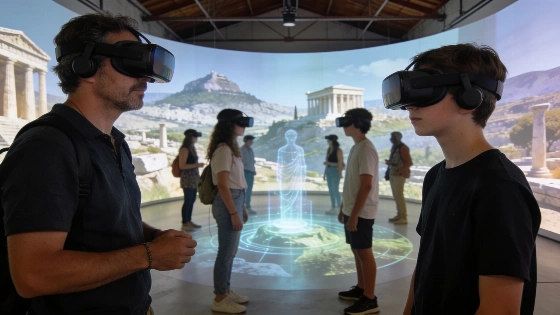
A new immersive production at Matadero Madrid transforms Homer's Odyssey into a virtual reality adventure. Visitors interact with ancient Greece using VR, holograms and 360-degree projections. The project aims to make the classic epic accessible to all ages.
Matadero Madrid has introduced La odisea, el viaje inmersivo at MAD Artes Digitales, a new exhibition that uses technology to bring Homer’s Odyssey to life. Opening in September, the production lets visitors step into the ancient world through virtual reality, interactive digital environments, and 360-degree projections. Instead of watching from the sidelines, guests become part of the story, moving through scenes from one of literature’s most famous journeys.
This exhibition is designed for everyone, whether or not they know the original text. It guides visitors through the Mycenaean era, recreating palaces, city-states, and daily life with detailed digital scenes. Nacho Ares, who curated and wrote the script, points out that the Odyssey’s themes—migration, loss, identity, nostalgia—still resonate today. Marketing director Alfonso Segura says the goal is for visitors to physically explore a digital world, blending ancient storytelling with new technology.
La odisea, el viaje inmersivo is officially scheduled to open on September 18, 2026, at Matadero Madrid as the fifth major production of MAD Artes Digitales.
Scenes from both the Odyssey and the Iliad are reimagined in different formats. In one, visitors wear VR headsets and experience the flight of an arrow from Troy’s walls. In another, they become a Trojan pushing the wooden horse into the city or join those hidden inside. Other rooms immerse guests in the sirens’ song, the underworld, and the land of the lotus-eaters, each with its own visual style and original soundtrack. The exhibition mixes hyper-realistic 3D recreations with animations inspired by Greek art.
A holographic screen brings the Cyclops Polyphemus to life in a way that feels almost physical. Throughout the experience, Homer’s voice guides visitors, keeping the story connected as they move from one myth to the next. The installation also looks at Greek polytheism and the social codes shaped by religion, giving context to the world behind the myths.
According to independent reports from 20minutos and the official Madrid Destino portal, the experience lasts approximately 90 minutes, with standard tickets starting at 19.90 €, family packages from 16.90 € per person, and special rates for groups and select categories. The venue operates from 10:00 to 20:00 on weekdays and Sundays, and until 21:00 on Fridays and Saturdays, with tickets available both online and at the box office.
The production is available in Spanish and English, aiming to reach visitors from outside Spain as well. The team behind the exhibition has previously created immersive shows like Tutankamón, Los últimos días de Pompeya, La leyenda del Titanic, and Cleopatra, la Exposición Inmersiva, which have attracted over five million visitors in 24 cities and won more than 20 international awards. Segura says the current challenge is to turn the Odyssey’s legendary voyage into a personal experience for each guest.
At the center of the exhibition is the idea of longing for home, shown through Odysseus’s desire to return to Ithaca after years away. Ares believes this emotional thread connects ancient myth to people today. The structure of the show is meant to let visitors feel nostalgia and the search for identity, not just observe them, as they take on the role of the story’s protagonist.
Elsewhere in Spain, debates about art, technology, and public engagement have made headlines, such as the recent cancellation of a politically charged art show in Valladolid. In contrast, the Odyssey installation at Matadero Madrid shows how digital tools can bring new life to classic stories without losing their complexity or cultural meaning.
As immersive exhibitions become more advanced, expectations for quality and accessibility are rising. MAD Artes Digitales has combined historical detail with interactive technology, making Homer’s epic something visitors can experience firsthand. This approach offers a new way for cultural institutions to connect with audiences: by letting them step inside the myth and take part in the adventure themselves.