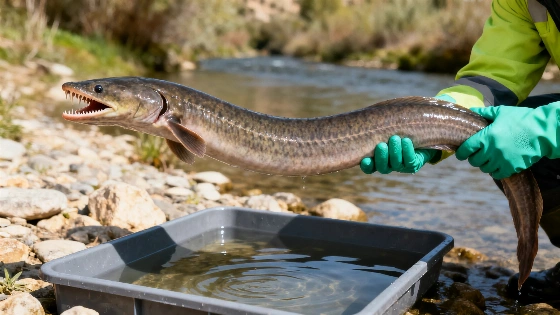
Moray Eel from Barbate: How a Cheap 'Snake' Delicacy Found Its Way onto Top Restaurant Menus. In Andalusia and the Canary Islands, moray eel has long been seen as a fish for frying and simple meals. Now, its unusual texture and flavor have caught the attention of chefs, changing the way this product is perceived.
In Barbate and other coastal areas of Andalusia, the moray eel—a fish with a snake-like appearance and an aggressive reputation—has unexpectedly become the focus of gastronomic attention. Until recently, it was considered food for the poor: moray eel was fried in simple eateries and home kitchens, and cost next to nothing at fish markets. Now, this type of fish is increasingly appearing on the menus of prestigious restaurants, where its unusual qualities are used to create new dishes.
The moray eel, which looks like a cross between a snake and an eel, has long deterred buyers with its appearance and numerous small bones. Local fishermen note that the fish can be dangerous to handle: even when dead, it can cause injury with its sharp teeth. Despite this, in Cádiz and the Canary Islands, moray was traditionally fried with a spicy marinade of vinegar, paprika, and garlic. In Barbate, there is hardly a seafood bar that doesn't offer this product, although many tourists are initially wary of it.
The situation changed when chefs recognized the culinary potential of the moray. Its gelatinous texture and rich flavor became sought after in modern cuisine. At Brasal restaurant in Cádiz, for example, moray is used to make cannelloni and a special version of “callos,” a dish where gelatin from the fish skin gives the sauce a thick, rich consistency. At El Faro and other local establishments, moray is served not only fried but also in complex stews, while at Aponiente, the chef has turned its skin into a crispy delicacy reminiscent of pork cracklings.
The reimagining of moray eel as a valuable product has led to an increase in demand and prices: while previously a kilogram cost around two euros, it now reaches seven. Fishermen note that moray eel is now bought not only by elderly homemakers but also by restaurants seeking unusual local ingredients. However, working with this product requires skill: due to the large number of bones and its unique texture, the fish is difficult to cook whole, and traditional processing methods often resulted in the loss of some of the meat.
The moray eel (Muraena helena) inhabits rocky areas of the Mediterranean Sea and eastern Atlantic, favoring a nocturnal lifestyle and defending its territory. In cooking, it is valued for its high collagen content, which gives dishes a special thickness and tenderness. In recent years, interest in local and previously underrated fish species has been growing across Spain, helping to preserve traditions and support fishermen. According to RUSSPAIN, such changes in gastronomy promote the development of local markets and expand perceptions of what Spanish cuisine can offer.