Ecological challenges and fallout from the Huelva disaster influence elections. Huelva faces a fragile balance between agribusiness and environmental protection. The railway disaster in Adamuz has left deep scars. Authorities and residents prepare for elections amid unresolved issues.
In Huelva, where the interests of farmers, industrialists, and environmentalists intersect, old conflicts have resurfaced ahead of the regional elections. After a large-scale train accident in Adamuz that claimed 46 lives and left dozens injured, attention to the region’s social and environmental issues has intensified. Authorities are attempting to strike a balance between economic development and the preservation of unique natural areas such as Doñana National Park.
Migration and agribusiness
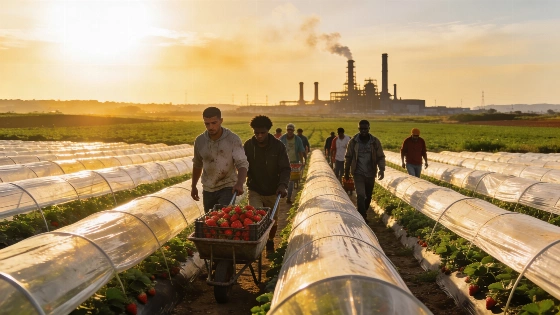
Agriculture remains a key sector of Huelva's economy. Every year, tens of thousands of migrants—mainly from Morocco, Bulgaria, Romania, and Senegal—are recruited to harvest berries. In the town of Almonte, with a population of about 25,000, up to 80,000 foreign workers are employed during the season. Local producers increasingly sign contracts to hire workers from abroad, with the requirement that they return home after the season ends. This helps partially control the situation, but does not solve the problem of the shortage of local labor.
In recent years, pressure from European buyers seeking transparency in environmental and labor issues has increased. Producers are forced to comply with strict standards for water use and plastic disposal, as well as provide decent living conditions for migrants. However, despite their efforts, some foreign workers still live in makeshift settlements without basic amenities, while illegal labor and exploitation remain pressing issues.
Ecology and Resources
The environmental situation in the region remains tense. The main problem is the depletion of water resources and the illegal use of groundwater for field irrigation. In 2024, an interdepartmental plan was adopted to restore Doñana, which provides for the closure of illegal wells and support for farmers willing to switch to less water-intensive crops. However, according to experts, most aquifers remain in critical condition despite the heavy rainfall last spring.
In addition to water issues, Huelva faces the consequences of chemical and mining industry activity. Huge accumulations of phosphogypsum and industrial waste continue to endanger the environment and residents' health. The region maintains a tense dialogue among environmental organizations, agricultural producers and authorities, though recent months have seen certain progress in reaching compromises.
Social Tension and Politics
The railway disaster in Adamuz has become a serious challenge for local authorities and social services. Victims and their families are complaining about insufficient support and bureaucratic hurdles when applying for compensation. Victims' organizations note that many issues remain unresolved, while the division of responsibility between government bodies and the railway operator is still unclear. According to some residents, this tragedy could influence the outcome of the upcoming elections, heightening dissatisfaction with the current government.
Against this backdrop, the influence of far-right forces is growing in the region, as they use the topic of migration to mobilize voters. At the same time, agribusiness representatives point out that without foreign workers, the local economy cannot cope with seasonal demands. Issues of integration, working conditions, and access to social services for migrants are becoming increasingly pressing.
Context and comparisons
The situation in Huelva recalls the demographic and social challenges faced by other Spanish regions. For example, in Zamora, authorities are also grappling with youth outflow and an aging population, a subject explored in detail in the article on the demographic crisis in Zamora. In both cases, regional authorities are seeking a balance between economic development, social stability, and environmental preservation.