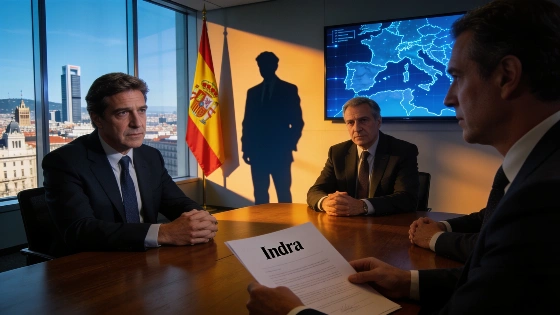
Moncloa sought to appoint José Luis Rodríguez Zapatero as Indra’s international adviser for Ibero-America. The plan was halted by independent directors, raising questions about political influence in major Spanish firms.
Plans by Moncloa to install José Luis Rodríguez Zapatero as a strategic adviser for Indra in Ibero-America were quietly shelved after resistance from independent directors, according to sources cited by EL MUNDO. The proposal, which surfaced two years ago, would have placed the former prime minister in a high-profile role at the technology giant, a company with significant state participation through the Sociedad Estatal de Participaciones Industriales (Sepi).
The initiative reportedly originated from Moncloa and was presented to Indra’s board by then-president Marc Murtra, who is now at the helm of Telefónica. Murtra described Zapatero as a figure with valuable international connections, particularly in Latin America. The move was supported by Sepi’s representatives on the board, including Miguel Sebastián, a former minister under Zapatero, who highlighted the ex-PM’s direct access to leaders such as Brazil’s Lula da Silva and Colombia’s then-president Gustavo Petro—key markets for Indra’s business interests.
However, the plan met with firm opposition from independent directors. The proposal was introduced as a routine agenda item, involving a consultancy contract exceeding €100,000 annually, and was designed to avoid public disclosure. Virginia Arce, then vice president and coordinator of the independents, along with directors Coloma Armero and Belén Amatriain, raised concerns about the reputational risks of such an appointment. They did not question Zapatero personally, but argued that the timing was inappropriate given previous controversies over political appointments at Indra.
Faced with the prospect of a contentious vote—independent directors made up half the board—Zapatero himself reportedly suggested withdrawing his candidacy to avoid further escalation. The episode unfolded against a backdrop of heightened scrutiny over government influence in listed companies, especially after Moncloa’s earlier push to install Murtra as Indra’s president in 2021.
Further details from board meeting records and seized agendas reveal that Murtra and Zapatero maintained contact, including two meetings in October 2024, shortly before Murtra’s move to Telefónica. One of these meetings included Javier de Paz, now president of Movistar Plus, who was also involved in the formation of the consultancy Análisis Relevante. Meanwhile, Indra appeared in the notes of Leire Díez, who recorded a “preferred relationship” with the company following discussions with Sepi’s former president Vicente Fernández and Antxón Alonso, a business associate of Santos Cerdán. These meetings also touched on opportunities in other state-linked firms such as Correos and Mercasa.
In a related context, Zapatero’s connections with Telefónica are documented, including a meeting in May 2024 with Alfonso Gómez, head of Telefónica Hispam. This was noted as a client meeting for Kreab, the consultancy that reportedly paid Zapatero up to €180,000 annually and believed he worked exclusively for them. Kreab has since raised concerns about undisclosed activities, including Zapatero’s involvement with Análisis Relevante and contacts with Huawei, a client of José Blanco’s consultancy, and is considering legal action.
Attempts to place other political figures in Indra have also surfaced. According to UCO reports, Santos Cerdán sought a board seat at Indra in 2018 via Sepi, but the move was blocked by Sánchez due to the company’s listed status. The episode highlights ongoing tensions over political appointments in major Spanish firms, with short sellers currently betting €300 million on Indra’s stock amid recent leadership changes.
This case echoes broader debates about the boundaries between politics and business in Spain. For further insight into the scrutiny faced by Zapatero’s associates, see the Senate’s handling of questions around his secretary’s role in the Plus Ultra case, as detailed in this related report.
Indra remains a key player in Spain’s technology and defense sectors, with the state maintaining a significant stake. The company has faced repeated controversies over governance and political influence, underscoring the challenges of balancing public oversight with market confidence. The Zapatero episode adds another layer to the ongoing debate about transparency and meritocracy in appointments to strategic enterprises.