A joint police operation has broken up a criminal network moving migrants and drugs between Algeria and Spain. The investigation began after 12 people disappeared at sea. Authorities arrested 20 suspects and seized boats, cash, and narcotics.
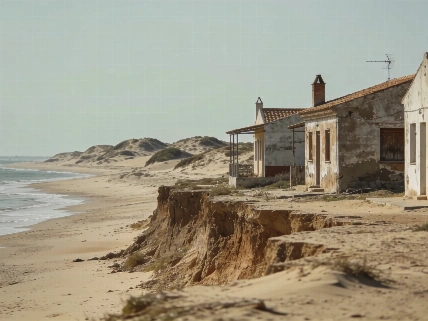
Spanish and European police have dismantled a transnational criminal network accused of smuggling hundreds of migrants and millions of euros in drugs between Algeria and Spain. The breakthrough came after the disappearance of 12 migrants who set out from Orán in October 2022, sparking a cross-border investigation that ultimately led to 20 arrests in Spain and Belgium.
The case began when a boat carrying 12 people vanished en route to the Spanish coast. With no word from the passengers for a week, families on both sides of the Mediterranean filed missing persons reports. The investigation, coordinated by Europol and Eurojust, quickly expanded as authorities in Spain, France, and Belgium uncovered a sophisticated operation moving both people and narcotics across borders.
According to police sources, the network was orchestrated by leaders based in Belgium, with a key lieutenant operating from Vitoria. The group is believed to have facilitated the illegal entry of around 400 migrants into Europe, charging between €8,000 and €10,000 per person depending on the boat's engine power. Payments were collected in advance, and the organization profited regardless of whether the boats reached Spanish shores or were lost at sea, as in the case of the missing 12.
In Algeria, migrants were hidden in clandestine houses until weather and sea conditions allowed for departure. Meanwhile, the Spanish branch prepared boats, pilots—often Moroccan specialists—and fuel. Once conditions were right, migrants were transported to various points along the Algerian coast for the risky crossing. The operation also involved smuggling large quantities of cocaine and MDMA, with drugs sent from Belgium to Spain and then shipped to Algeria, where synthetic pills fetch higher prices.
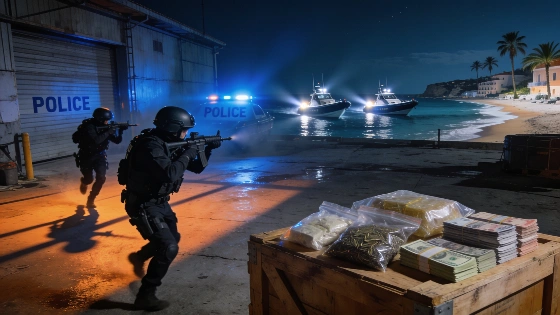
Authorities estimate the network generated close to €8 million over four years—half from migrant smuggling and half from drug trafficking. The Spanish National Police, French police, Belgian Federal Police, and Spain's customs surveillance agency coordinated efforts to track the group. The arrests included four suspects in Belgium—two of whom were already wanted by Algerian authorities for drug offenses—and 16 more in Spain, mainly in Alicante, Madrid, Vitoria, and Murcia. Four of those detained have been jailed.
During the operation, police searched 11 properties (eight in Alicante, three in Belgium), seizing two high-powered speedboats, a pick-up vehicle used for launching boats, a 40-horsepower outboard motor, 27 fuel canisters, and extensive documentation related to boat and engine purchases. Weapons were also recovered: two firearms from the ringleaders (one stolen), a replica weapon, and a long gun from the Spanish cell. Officers confiscated 1.2 kilograms of MDMA powder, five precision scales, 35 mobile phones, and €12,430 in cash.
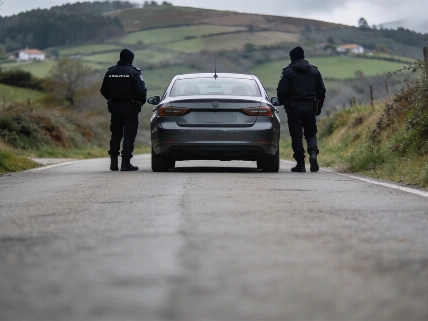
The criminal group used elaborate security measures to avoid detection, including scout vehicles, surveillance of embarkation and landing sites, and armed enforcement to protect drug shipments and prevent theft by rival gangs. The empty boats were distributed along Spain's southern coast before returning to Algeria, mirroring the movement of drugs stored in so-called 'nurseries'—safe houses for narcotics.
This case highlights the persistent risks faced by migrants attempting dangerous sea crossings, as well as the complex logistics behind smuggling operations in the western Mediterranean. The region has seen repeated incidents involving maritime safety and organized crime, such as the recent evacuation of buildings in Barcelona after a sinkhole threatened residents—a reminder of the diverse challenges confronting Spanish authorities. For more on local emergency responses, see the report on Barcelona's building evacuations following a major sinkhole.
Spain remains a key entry point for migrants from North Africa, with authorities regularly intercepting boats along the coasts of Alicante, Murcia, Almería, and the Balearic Islands. The collaboration between European police agencies in this case underscores the international dimension of both human trafficking and drug smuggling. The dismantling of this network is seen as a significant blow to organized crime operating between Algeria and Spain, but officials warn that similar groups continue to adapt their methods in response to law enforcement pressure.