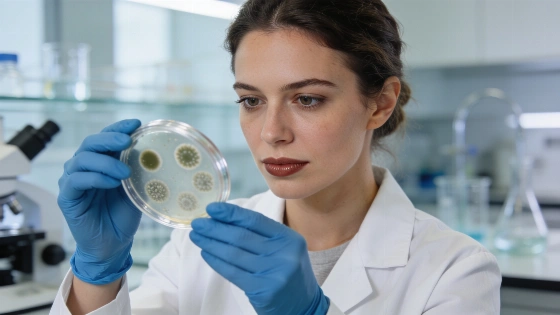
Microorganisms make up most of the planet’s biomass and are essential to human health, food, and the environment. Despite their reputation, only a tiny fraction are harmful. Their influence is far greater than most people realize.
Every year on September 17, International Microorganism Day draws attention to a force that outweighs all the elephants on Earth: microorganisms. The day was created to challenge the idea that microbes are just threats to human health and to highlight their central role in keeping life going, advancing medicine, and supporting ecosystems.
The event began in Portugal and has been coordinated by the Federation of European Microbiological Societies (FEMS) since 2020. By 2026, it has grown, with new public events and announcements in several countries, showing its wider reach and recognition among scientists.
On September 17, 1683, Antonie van Leeuwenhoek reported his observations of microorganisms in dental plaque to the Royal Society, marking a pivotal moment in microbiology.
Microbes are everywhere, and their numbers are hard to grasp. In the oceans, they make up between half and nearly all of the total biomass. The mass of microbial cells in the world’s waters is about the same as 240 billion African elephants. A single gram of surface soil can hold more than a billion bacterial and archaeal cells, trillions of viruses, tens of thousands of protozoa and microalgae, and 200 meters of fungal hyphae. This hidden world is far larger than all visible life combined.
Still, most people think of microorganisms mainly as sources of disease. In reality, the picture is much broader. Of the estimated one trillion microbial species, only about 1,400—including bacteria, viruses, fungi, protozoa, and helminths—are known to cause disease in humans. That’s less than 1% of all known species. The rest are either harmless or helpful.
The human body is home to about 40 trillion bacterial cells, which actually outnumber human cells. This relationship is not just peaceful—it’s essential. Microbes help digest fiber, make vitamins, and train the immune system, among other jobs. Without them, basic processes that keep us alive would break down.
Recent research published in Nature in 2026 highlights how marine bacteria work together to break down complex carbohydrates from brown algae, demonstrating their practical role in the carbon cycle and ocean ecosystems. This underscores the importance of marine microbes in global nutrient recycling and climate regulation.
Medicine and pharmacology rely heavily on these tiny organisms. Microbes are a main source of therapeutic molecules. Studies of the gut microbiome are opening new ways to treat chronic inflammatory diseases, metabolic disorders, and some cancers. Viruses that target bacteria are also being reconsidered as a tool against antibiotic-resistant infections.
Microorganisms are also at the heart of global food systems. Soil microbes are vital for agriculture and food production. Beyond the fields, they are used to make bread, cheese, fermented drinks, yogurt, vitamins, enzymes, bioplastics, and biofuels. Their influence reaches into almost every part of daily life and industry.
On a global scale, microbes help fight climate change and support the circular economy. Their ability to recycle nutrients and break down waste is key to reducing environmental impact and using resources more efficiently.
The story of microorganisms in science began with a letter. On September 17, Antonie van Leeuwenhoek, a Dutch merchant, wrote to the Royal Society of London describing the first observed unicellular organism—what he called an “animálculo”—using microscopes he built himself. His work laid the foundation for modern microbiology and changed how people understood the living world.
Recognizing the constant work and value of microorganisms is more than a scientific detail. It means shifting from fear to respect for the invisible engines that keep life running on Earth. As research uncovers more about their influence, it’s clear that the future of medicine, agriculture, and environmental care will depend on how well we understand and use the power of these microscopic giants.