Irene Montero will formally launch her campaign to head a left-wing coalition in Spain’s next general election. Podemos is calling for unity among alternative parties as others remain without a clear candidate.
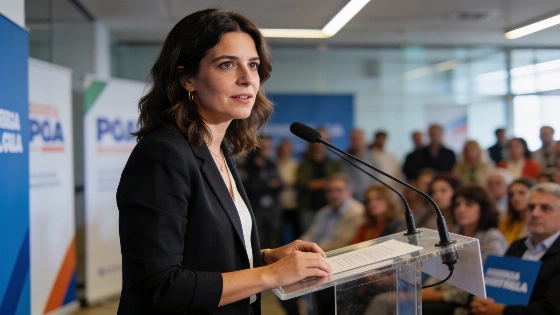
Irene Montero is about to take her most direct step yet in Spanish politics, confirming she wants to lead a new left-wing coalition into the next general election. She will make the announcement at a public event in Madrid under the slogan “Paz, casa, trabajo.” The move comes as progressive parties remain divided, and puts pressure on rivals who have not yet named their own candidates.
Podemos, the party backing Montero, has been preparing for this since April 2025, when it first put her forward as the main figure for a broad left alternative. Reports from Infobae and Orain note that the party’s leadership has repeatedly called for unity among leftist groups and civil society, aiming to build a coalition that is not subordinate to the PSOE. Still, Podemos has not finalized its alliance strategy, and it is unclear which groups will ultimately join Montero.
Podemos describes its new project as 'nítidamente de izquierdas'—explicitly left-wing—with priorities including housing, cost of living, working hours, peace, and climate.
Efforts to form partnerships have already run into problems. Podemos floated the idea of an electoral tandem with Gabriel Rufián, the ERC spokesperson in Congress, after a joint appearance, but the proposal did not move forward. The party later clarified it would not merge with other national-level forces, which shows how complicated it is to build a truly broad left bloc. This position, confirmed by sources including Democrata, highlights Podemos’s intent to stay independent while still seeking wider alliances.
Montero’s renewed push comes as other left-leaning parties in government—Movimiento Sumar, IU, Comuns, and Más Madrid—have yet to name a leader for their own coalition. As noted by Democrata and other outlets, this lack of clear leadership gives Podemos a chance to set the agenda and possibly attract voters and activists from across the left.
At the same time, Podemos is running internal primaries to pick candidates for upcoming regional and municipal elections. Ione Belarra, the party’s general secretary, will run for the top spot in the Community of Madrid, aiming to restore Podemos’s presence in the regional parliament after recent setbacks. According to Infobae, this internal mobilization is seen as an important step to strengthen the party’s regional influence ahead of the national campaign.
The idea of a tandem between Irene Montero and Gabriel Rufián (ERC) was discussed but did not advance, and Podemos has since indicated it will not merge with other national parties, limiting the scope for a truly broad coalition.
The timing of Montero’s announcement is deliberate. With the left divided and the PSOE in a dominant position, Podemos is betting that an early, clear declaration can rally support and push other parties to clarify their own plans. The party’s strategy echoes recent moves by regional leaders to assert control over electoral processes, such as when Madrid’s president intervened in voter registration rules, a development reported earlier.
Podemos now faces the challenge of convincing both grassroots activists and established organizations that a new coalition under Montero can break the cycle of fragmentation and offer a real alternative to the PSOE. The party’s refusal to merge with other national forces may limit its reach, but it also sets Montero apart as a voice for a left that wants independence from traditional power structures. In a political scene where alliances are often short-lived, Montero’s move is a calculated risk. The next few months will show whether Podemos’s gamble brings new momentum or leaves the party more isolated in Spain’s changing political landscape.