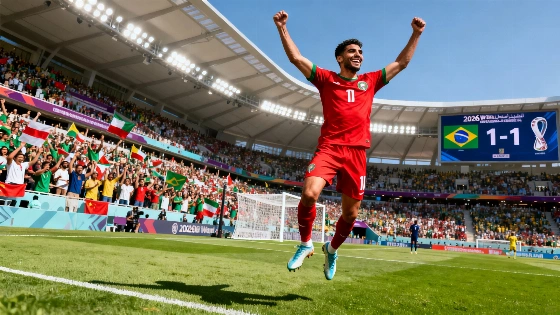
Morocco have moved Ismael Saibari from midfield to the basic striker position at the 2026 World Cup. The decision by new coach Mohamed Ouahbi marks a clear break from Walid Regragui’s previous system, where Saibari played as a supporting midfielder behind Ayoub El-Kaabi. The change paid off immediately: wearing Morocco’s No. 11 shirt, Saibari scored the opening goal in the 1-1 draw against Brazil in East Rutherford, New Jersey.
Ouahbi’s 4-2-3-1 formation has put Saibari closer to goal, giving him more chances to exploit space and use his pace. His movement and finishing stood out in Morocco’s first group match. El-Kaabi remained on the bench throughout the Brazil match, signaling a preference for younger talent. Saibari then scored against Scotland after 1 minute 10 seconds, the tournament’s fastest goal at that point, beating Michal Sadilek’s previous mark of 5:07. Morocco won 1-0 in Foxborough, Massachusetts, with Saibari’s strike securing the result.
The Scotland match tested Saibari and Morocco’s new tactical approach. His goal helped the Atlas Lions advance to the knockout stage, and he scored in all three of Morocco’s group matches. He later made the difference in the 1-1 match against the Netherlands, converting the winning penalty in a 3-2 shootout victory after goalkeeper Yassine Bounou saved Crysencio Summerville’s attempt. Saibari’s goals and penalty made him one of Morocco’s leading attacking figures as the team progressed.
Saibari was later ruled out of Morocco’s quarter-final against France. Ouahbi said the team would stick to its footballing philosophy in the forward’s absence. Saibari’s contribution went beyond his group-stage goals: he also delivered under pressure in the shootout against the Netherlands. Morocco’s run showed how a tactical change can give a player a prominent role in different match situations.