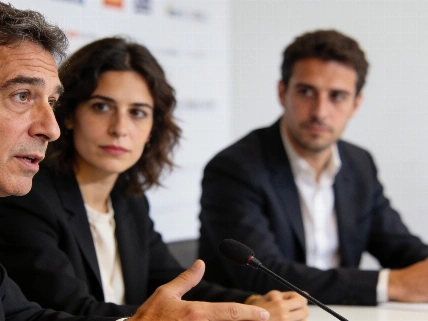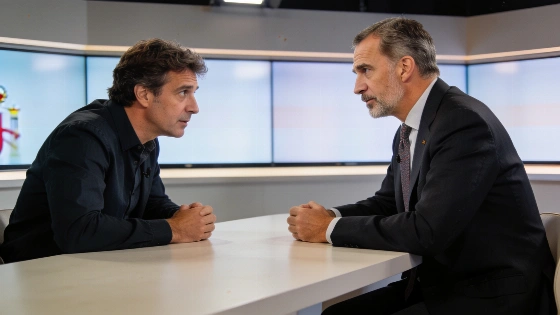
The dispute centred on whether the government had acted early enough to prepare a physical barrier at sea after more than 80,000 people entered Ceuta on 30 and 31 July. During an interview on Informativos Telecinco, presenter Carlos Franganillo challenged Prime Minister Pedro Sánchez over the government’s handling of the crisis. The scale was far greater than the roughly 10,000 people who entered Ceuta in May 2021, during a separate diplomatic crisis between Spain and Morocco.
Franganillo referred to a Supreme Court warning which he said had come weeks earlier, arguing that without an obstacle at sea, “hot returns” could not take place. He also said the people entering Ceuta appeared better informed about the ruling than the government. Sánchez replied: “No es verdad, a lo mejor usted está mal informado, Carlos” (“That is not true; perhaps you are misinformed, Carlos”, translated from Spanish).
The exchange followed a question about Sánchez’s holiday during the mass arrival. The prime minister said he worked 24 hours a day, seven days a week, and had “derecho a estar con mi familia de vacaciones” (“the right to spend my holiday with my family”, translated from Spanish). The interview also covered housing, a subject addressed in another campaign interview report.
On the question of responsibility, Sánchez said he had not claimed that mafias caused the arrivals. He said they might have taken advantage of a hoax. Franganillo had raised the possibility that the attackers were connected to mafias. Spanish police later reported that Moroccan gendarmes had guided groups during the crossings, while the police director-general said the report did not attribute the planning to the Moroccan government. Sánchez’s position was that there was no evidence that Moroccan authorities organised the arrivals.
Sánchez said the government had been working with Moroccan authorities since 8 June to establish a physical border at sea. He said it had commissioned buoys through a public contract and explained its actions in the first hours of the crisis. His account was that Spain had acted from the outset to address the court ruling through cooperation with Morocco. Documents published by La Moncloa showed that on 29 July the CNI informed the Government Delegation that calls to cross by sea and over the border fence were circulating on social media; the CNI also sent an urgent note to Moroccan intelligence that day. The government said those communications did not predict the eventual scale of the entry and were not a formal warning through the chain of command.
Spanish intelligence has found no evidence that Morocco organised the July crossings. The CNI’s assessment of the May 2021 influx was different: roughly 10,000 people crossed after Morocco temporarily eased frontier controls, amid a dispute following Spain’s admission of Polisario Front leader Brahim Ghali for medical treatment. Spanish intelligence later assessed that Moroccan authorities had used those crossings to pressure Madrid.
Three months after the July influx, about 15,000 migrants were reported to remain in Ceuta, while a Spanish police report said more than 88,000 had returned to Morocco. Spain also committed 6,000 reception places and €168 million in funding connected with the crisis. Spanish justice was examining the role of actors on the Moroccan side.
The discussion continued until the programme went to advertising. Franganillo ended the interview after the break.