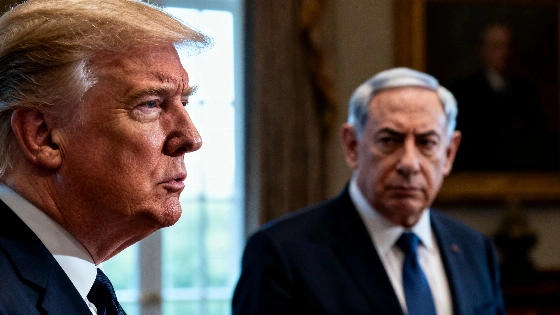
Trump Urges Israel to Refrain from Strikes on Lebanon Amid Talks with Iran. Donald Trump sharply condemned Israel's airstrike on Beirut and demanded restraint. The US and Iran are close to signing a memorandum to end the war. Israel is seeking security guarantees regarding Lebanon.
US President Donald Trump publicly opposed Israel's airstrike on Beirut, calling the attack a mistake amid the final stage of negotiations with Iran. According to him, Israel's actions undermine the chances of signing a memorandum on ending the war, which Washington and Tehran plan to finalize as early as this coming Sunday. Trump emphasized that the incident occurred at a critical moment, when both sides are as close as ever to a peace agreement.
Trump's sharp response came as a surprise to Israeli leadership. Israeli Prime Minister Benjamin Netanyahu faced criticism from Washington after Israeli forces struck Lebanon's capital in retaliation for shelling from Hezbollah's territory. The American leader called the attack on Beirut 'unnecessary' and noted that Hezbollah's response was insignificant. This marked the first public disagreement between the US and Israel since the start of the war with Iran, although previously the countries have shown unity on key security issues.
According to sources, Trump has already restricted Israel's freedom of action in Lebanon. A week earlier, he demanded that Netanyahu abandon plans for a strike on Iran after Tehran's missile attack on Israeli territory. Now the Israeli prime minister is pressing for an urgent meeting with Trump after the G7 summit to discuss the terms of a future agreement and secure guarantees regarding actions against Hezbollah in Lebanon.
Tehran also responded to the escalation. The head of Iran’s National Security Council warned that Lebanon is a key component of the country’s regional strategy, and any attempts to cross “red lines” would be met with a firm response. Iranian parliament speaker Mohammad Bagher Ghalibaf accused the United States of supporting Israeli strikes and said this could derail the negotiations.
Despite the tensions, the White House expects to sign a memorandum with Iran in the coming days. The document, unofficially known as the 'Islamabad Declaration,' is being developed with Pakistan’s mediation and the support of Qatar. The agreement is intended to form the basis for 60 days of talks on a full ceasefire and stabilization of the region, including Lebanon. However, Iranian state media report that a final decision on the agreement has not yet been made, and some politicians in Tehran oppose a compromise.
The signing of the memorandum coincides with Donald Trump’s 80th birthday. On this day, he plans to attend a UFC event at the White House and then travel to the G7 summit in France. If the agreement succeeds, a gradual lifting of restrictions on passage through the Strait of Hormuz—a key route for global energy—is expected.
According to American officials, the main parameters of the deal have been agreed upon, but the details are still under discussion. Former US President Barack Obama has expressed doubts about the effectiveness of the new agreement compared to the 2015 nuclear deal (JCPOA). Overall, the situation surrounding the negotiations remains tense, and the outcome of the agreement has a direct impact on Middle East security and the stability of energy supplies, which is also significant for European countries, including Spain.
For reference: Lebanon and Israel do not have diplomatic relations, and Hezbollah is recognized as a terrorist organization in several countries. The Strait of Hormuz accounts for up to 20% of global oil supplies, and any disruptions to its operation affect prices and logistics in Europe. In recent years, Spain has increased the share of energy imports from the Persian Gulf region, making the situation around Iran and Lebanon particularly sensitive for the national economy.