Jordi Pujol called on Catalans to integrate immigrants during a tribute by Junts' youth wing. The event in Girona drew political figures and reignited debate over identity and inclusion in Catalonia.
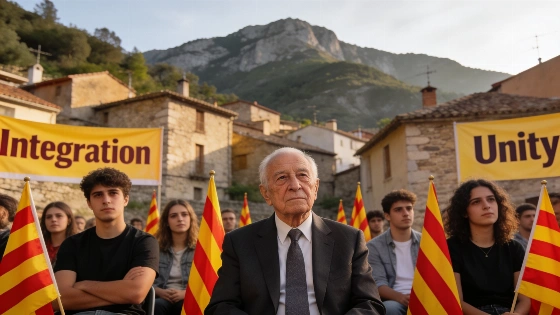
At a tribute event in Planoles (Girona) organized by the Joventut Nacionalista de Catalunya (JNC), Jordi Pujol, former president of the Generalitat, delivered a pointed message on the need for Catalonia to actively integrate immigrants. The gathering, attended by prominent Junts figures such as Jordi Turull, Josep Rull, Mònica Sales, and Albert Batet, as well as former JNC leaders from the Convergència era, became a focal point for renewed discussion on Catalan identity and social cohesion.
Pujol, now 96, was present in the front row as his prepared speech was read by Carlota Monfort, president of the JNC's national council. Without directly naming Aliança Catalana, the far-right pro-independence party led by Sílvia Orriols, Pujol's remarks challenged the party's anti-immigration stance, which has gained traction in the Ripollès region, where the event took place. He emphasized that Catalonia's strength has always come from its ability to integrate diverse populations, not from uniformity or exclusion.
The former president urged attendees to avoid turning political adversaries into enemies and warned against confusing firmness with sectarianism or identity with exclusion. He stressed that Catalonia has historically been a pluralistic society and that maintaining this openness is essential for its future. Pujol highlighted the ongoing responsibility to preserve the Catalan language, transmit cultural values, and foster social cohesion, especially in a globalized world where identities are increasingly challenged.
During the event, Aleix Agustí, current secretary general of the JNC, praised Pujol's legacy and the inclusive vision of 'Cataluña, un solo pueblo.' The tribute also served as a platform to reaffirm the importance of integrating newcomers and resisting narratives that promote division. Pujol's speech underscored that Catalonia's future depends on confidence and a strong sense of self, rather than fear or nostalgia.
He cautioned against relying solely on political solutions, arguing that a strong nation is built on a responsible and resilient society. According to Pujol, the greatest threat facing Catalonia is not external pressure but internal fatigue and resignation. He reminded the audience that the region has endured wars, dictatorships, and persecution, yet has always managed to persevere.
For context, debates over identity and inclusion are not unique to Catalonia. Across Spain and Europe, questions about immigration and cultural integration continue to shape political discourse. In a different sphere, public figures have also faced scrutiny over personal and social issues, as seen when Paula Badosa addressed her breakup with Stefanos Tsitsipas, highlighting how personal narratives can intersect with broader societal debates.
As Catalonia navigates these challenges, the call for integration and unity remains central to its political and social agenda. The JNC tribute to Pujol not only honored his decades-long commitment to the region but also reignited essential conversations about the future of Catalan society in an era of rapid change and growing diversity.
For reference, Catalonia has long been a destination for migrants from other parts of Spain and abroad, contributing to its economic growth and cultural richness. The region's approach to integration is closely watched across Spain, especially as political parties debate the balance between preserving local identity and embracing newcomers. The ongoing discussion reflects broader European trends, where questions of language, culture, and social cohesion remain at the forefront of public policy.