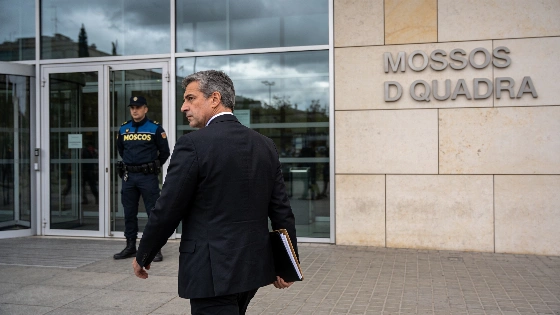
Josep Lluís Trapero has resigned as director general of the Catalan police. His departure follows two years of internal disputes and leadership uncertainty. The Interior Department is set to explain the changes at a public briefing.
The director general of the Mossos d'Esquadra, Josep Lluís Trapero, has resigned amid growing discord within Catalonia’s Interior Department. After two years in the role, his departure changes the leadership of the regional police force. Sources close to the department confirmed his decision as officials prepare to address the changes at a public briefing.
The move follows months of tension over planned changes to the police command and continued uncertainty about the force’s direction. The Interior Department has scheduled a press conference for 10:30 to explain the reshuffle. Catalan News and ARA report that Trapero’s resignation followed accumulated disagreements within the department, rather than a single incident. The leadership change forms part of a broader restructuring of the Mossos d'Esquadra.
The department has already replaced its second-most senior official, Tomàs Carrión, with Joana Ricardo. Officials say Carrión left of his own accord.
Trapero’s time as chief was shaped by the aftermath of the procés and the events of the 1 October referendum, when the Mossos d'Esquadra were at the center of a major political crisis in Spain. As the top officer during that period, Trapero was called before the Audiencia Nacional, putting the force under intense scrutiny and prompting questions about its role and neutrality. ARA notes that Trapero remains closely linked to the events of 2017, which continue to shape how the Mossos and their leadership are viewed.
Since then, the Mossos have worked to reestablish themselves as a judicial police force, distancing themselves from political disputes while emphasizing their accountability to the courts. Restoring credibility and neutrality became a priority after 2017, as the force’s legitimacy faced repeated challenges inside and outside Catalonia. ARA reports that the department has sought to emphasize its judicial role and move away from ongoing political conflict.
Internal divisions have deepened as the department debated further changes at the top. The leadership crisis echoes other recent political shakeups in Spain, including the withdrawal of Sara Oviedo from the PSOE mayoral race in Leganés, where internal rifts left only one candidate. In both cases, unresolved disputes led to abrupt departures, leaving institutions trying to regain stability. Catalan News reports that the planned restructuring of the command has become a particular point of tension, with debate continuing over the police force’s direction.
Recent controversies have added to the department's internal strain. They include covert Mossos operations in schools and police presence at teachers' assemblies. Officers also used pepper spray at pro-Palestinian protests. These incidents have deepened perceptions of prolonged internal tension within the Interior Department.
Trapero’s resignation changes more than the personnel at the top of Catalonia’s police force. It exposes the fragility of the region’s security leadership at a time when public trust in institutions is unsettled. The Mossos d'Esquadra, still dealing with the fallout from years of political conflict, now face further uncertainty over their leadership. The Interior Department’s next steps will draw close attention, with operational effectiveness and public confidence both at stake. ARA and Catalan News report that further changes to the Mossos’ leadership or a redistribution of powers are possible. The ministry’s public statements may clarify whether Trapero left voluntarily or was effectively pushed out.