A court decision has reignited debate over Rita Barberá’s era in Valencia. The Azud case links her inner circle to urban corruption. Political memory and legal reality now collide in the city’s public life.
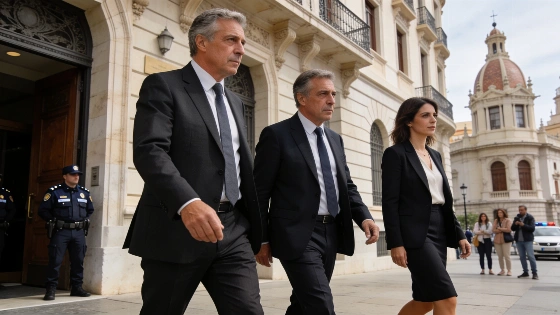
A recent court order has unsettled the official story around Rita Barberá, directly tying her closest circle to the Azud corruption case. The ruling lays out how the former mayor protected her brother-in-law, José María Corbín, and vice-mayor Alfonso Grau, both central to a network of illegal urban deals and kickbacks during her time in office. According to EFE and other Spanish media, the judge has ended the investigation phase and sent 38 people to trial, including current and former city and party officials.
For years, the Partido Popular carefully maintained Barberá’s image as “la alcaldesa de España,” even as evidence against her administration grew. The tenth anniversary of her death has brought her name back into public debate, not just through court documents but also in a new episode of ‘Salvados’ that traces her rise and fall, sometimes with a sympathetic lens. As reported earlier, the program focused on the silence and isolation of her final years, as former allies distanced themselves when the investigations closed in.
The court officially confirmed that three of Barberá’s nieces are among the accused, reinforcing the picture of a family-political network at the heart of Valencia’s city administration.
The court’s findings are clear: Barberá was not a bystander. She knew about and took part in urban planning decisions that benefited developers who hired Corbín as a fixer, using his family connection to the mayor. Her sister, Corbín’s wife, managed Barberá’s schedule as chief of staff, tightening the web of influence. The judge’s report describes a system where public progress came with a price, echoing the old saying, “everything for the people, but without the people.” Judicial documents estimate that the Azud scheme involved about 3.6 million euros in illegal commissions and fake legal services, according to recent court summaries.
Barberá’s death from liver cirrhosis in 2016 meant she was never prosecuted, and the Supreme Court closed the ‘pitufeo’ money laundering case, part of Operation Taula. Meanwhile, her closest collaborators faced growing legal pressure. Some who once pushed her out of the party later tried to defend her legacy, giving her honors and even naming a viaduct after her. The current mayor, María José Catalá, and regional PP leaders have invoked Barberá’s memory as a political asset, despite the unresolved stains on her record. EFE and judicial sources note that the judge’s decision highlighted Barberá’s personal support for Corbín, giving him special access to city contracts and shielding him from scrutiny.
The Azud case also touches the opposition. The investigation found that the corruption network reached the PSPV-PSOE, showing that the flow of illegal money and influence was not limited to one party. The judge’s documents make it clear that Valencia’s transformation under Barberá was built on questionable deals and personal favors, not just on big civic projects or economic growth.
The Azud case is described by Spanish judicial and media sources as a broad network of abuses in urban planning and public contracts, involving bribery, rigged tenders, and land operations not only in Valencia but also in other municipalities of the region. The renewed focus on the case in September 2026 has exposed old divisions within the regional Partido Popular and highlighted uncomfortable ties between city officials, contractors, and party elites.
Valencia’s political scene is still shaped by cycles of nostalgia, reinvention, and selective memory. The latest court revelations force the city to reckon with its recent past, challenging the polished version of Barberá’s legacy promoted by her successors. While the PP tries to redeem her public image, the courts bring to light the darker side of her administration. Valencia is left to face the real cost of its transformation and the ongoing reluctance of its political class to confront uncomfortable truths when power and loyalty are involved.