Julián García Vargas, a pivotal figure in Spain’s transition era, has died. He led the reduction of compulsory military service and drove major reforms in the health system, leaving a legacy that still shapes Spanish institutions.
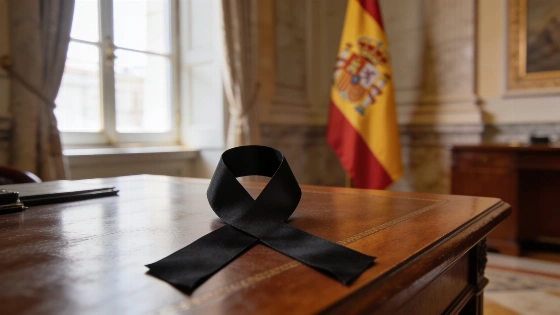
Spain lost one of its main reformers on September 29, 2026. Julián García Vargas, who led the Defence Ministry through the early 1990s and changed the country’s health system, has died. EFE confirmed his death and gave his age as 80. Some obituaries say 81. The exact number may be clarified by family or government sources. His time in office was marked by bold reforms and a reputation for honesty that set him apart after Franco’s rule.
As Defence Minister under Felipe González, García Vargas cut compulsory military service from twelve to nine months. Spanish media confirmed this was the last big step before conscription ended for good in the next term. He led during the Balkan wars. Spain’s military and diplomats faced tough tests in Europe. García Vargas also served as the European Union’s special envoy, overseeing peace deals in Bosnia. He was at the center of crisis management abroad.
During his time as Minister of Health and Consumer Affairs (1986–1991), García Vargas oversaw the launch of the Consejo Interterritorial, the Instituto de Salud Carlos III, and the Organización Nacional de Trasplantes, which remain pillars of Spain's health system.
Before Defence, García Vargas had already changed Spain’s health system. He took over as Health Minister after Ernest Lluch, who was later killed by ETA. García Vargas pushed through the Ley General de Sanidad, Spain’s general health law. This law has lasted forty years. In 1987, he shifted funding from social security to general taxation. That move gave health coverage to everyone, not just those with social security. It made the system fairer. Infodefensa and other sources say these changes built the base for Spain’s universal healthcare.
He also set up the Instituto de Salud Carlos III and the Organización Nacional de Trasplantes. Both are still key to Spain’s medical research and organ donation. García Vargas helped create the Consejo Interterritorial, which coordinates health policy across Spain’s regions after powers were handed to the autonomous communities. Spanish analysts often point to these changes as reasons why the health system can adapt and survive shocks. The impact is still felt.
His career was not free of trouble. In June 1995, Infodefensa reported that García Vargas resigned after classified CESID documents leaked. The political fallout made it impossible for him to stay. His predecessor, Narcís Serra, had faced a similar end. García Vargas took over from Serra in March 1991, according to EFE. Even after this sudden exit, he kept his reputation as one of Spain’s most respected Defence Ministers. He stayed active in the private sector. He led Tedae, the main group for Spain’s defence tech firms, and Feindef, the country’s top defence industry fair.
Public farewell ceremonies were held at the San Isidro funeral home in Madrid on the day of the announcement, underscoring the public significance and immediacy of the news.
Few officials have changed Spain’s institutions as much as García Vargas. His reforms in Defence and Health were not just paperwork. They changed how the state and its people connect. The general health law he pushed outlasted seven education laws. That says a lot. Spain still deals with the legacy of its transition. García Vargas stands out. His work bridged old and new. His reforms are part of daily life. His death closes a chapter. A generation of public servants built modern Spain. He set a high bar for those who come next.