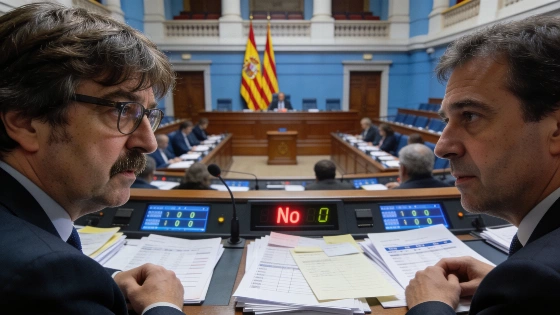
Junts per Catalunya has confirmed it will vote against the government’s deficit targets in Congress. This move puts Pedro Sánchez’s budget plans at risk and intensifies the dispute over regional financing. Tensions rise ahead of key votes.
Junts per Catalunya has announced it will oppose the government’s proposed deficit targets in Congress, creating a new obstacle for Pedro Sánchez’s plans to pass the next State Budget. The party, led by Carles Puigdemont, confirmed on Monday that it will vote against the deficit path in Tuesday’s plenary session, a decision that could derail the government’s fiscal agenda for the coming year.
Josep Rius, Junts’ national spokesperson, stated that the party’s stance is a direct response to what it sees as insufficient flexibility for regional spending. According to Rius, the Ministry of Finance’s proposal to cap regional expenditure growth at 4% and set a maximum deficit of 0.1% for the next three years is unacceptable. He also criticized the lack of deficit margin for municipalities, arguing that the government has failed to engage in meaningful negotiations with Junts in Madrid.
The conflict extends beyond the deficit vote. Junts has also announced plans to submit a full amendment against the upcoming law on regional financing, joining the Partido Popular and Vox in challenging the government’s approach. The party intends to use this amendment to advocate for a fiscal arrangement for Catalonia similar to the economic agreements enjoyed by Spain’s foral communities. Rius accused other Catalan parties, particularly ERC, of diluting their own commitments on tax management and fiscal autonomy for Catalonia.
Last December, Junts already voted against the government’s deficit proposal, which contributed to the collapse of the previous budget attempt. Rius attributed the current impasse to what he described as Pedro Sánchez’s electoral motivations, claiming the government is more interested in political maneuvering than in updating the budget framework that has been in place since 2023. He warned that if early elections are called, responsibility will rest with Sánchez for undermining the coalition that enabled his investiture.
The government recently set a record spending ceiling of €226.032 billion, a step that does not require parliamentary approval. However, the deficit targets must pass through Congress, and if the vote fails, the executive will have one month to present new objectives. The ongoing standoff with Junts signals further turbulence for the government, as the party’s parliamentary group, led by Miriam Nogueras, is also preparing to challenge the regional financing law as it moves through the Council of Fiscal and Financial Policy and the Council of Ministers.
Junts’ push for a new fiscal model for Catalonia comes amid broader debates over Spain’s system of regional funding. The party argues that only a concerted shift toward greater fiscal autonomy can address what it calls the “fiscal deficit” suffered by Catalonia. The dispute highlights persistent tensions between the central government and regional actors over budgetary control, tax management, and the distribution of public resources. Spain’s regional financing system has long been a source of political friction, with Catalonia and other communities demanding more control over their finances. The outcome of these votes in Congress will shape not only the immediate prospects for the State Budget but also the broader balance of power between Madrid and the autonomous regions.