Kent Nagano opened the OCNE season with Mahler's "Resurrection" Symphony. His restrained reading found intensity without theatrical excess, though weak soprano projection briefly unsettled the finale.
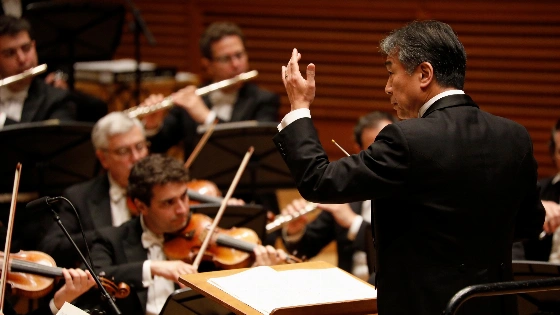
Kent Nagano opened the new season of the Orquesta y Coro Nacionales de España with a controlled, demanding performance of Gustav Mahler's Sinfonía núm. 2 "Resurrección". It was his first appearance as the orchestra's new titular and artistic director. The central tension was clear from the start. This was Mahler without inflated rhetoric, yet it still reached solemnity and emotional force.
The final movement showed Nagano at his best. He shaped the long rise with patience and order. The text and music came together as a universal civil liturgy instead of a blast of sheer volume. The reading was serious and notably coherent. The brass, though, turned abrupt at times, and its volume balance slipped at the most charged points.
The 2026/27 OCNE season comprises 119 concerts of symphonic, chamber and choral music, according to Platea Magazine.
That restraint set Nagano apart from the more openly exalted Mahler linked to Leonard Bernstein and to Teodor Currentzis's memorable Madrid performance last March. The Californian conductor put structure, precision and sound quality first. His reading looked toward the musical language of the twentieth century without giving up intensity or transcendence.
The National Orchestra responded at a high level. The double basses sat on the left, which gave the opening movement more weight and definition. Nagano's close control of the dynamics also brought out the details of the funeral march and its dramatic design. The mood stayed solemn. There was no gratuitous theatrical effect.
The second movement had a very different character. Its Ländler moved with ease and polish, especially in the woodwinds. It sounded more like an aristocratic palace dance than a village celebration in Central Europe.
Before becoming the OCNE’s titular and artistic director, Nagano had already conducted the orchestra four times between 2014 and 2024. His appointment begins a five-year period that will include several programmes, among them a Schubert cycle.
That elegance came at a cost. The third movement missed some of Mahler's irony, even though the strings led by concertmaster Valerie Steenken played with distinction.
Christina Bock brought musicality and good taste to Urlicht, the song from Des Knaben Wunderhorn. A genuine contralto can be hard to find for this repertoire. The mezzo-soprano instead brought a pleasing timbre and more presence than Jane Archibald. Archibald's soprano was practically inaudible beside the chorus. That lack of projection kept the finale's captivating vocal contrast from fully emerging. The official programme and RTVE's concert broadcast identified Archibald and Bock as the two soloists.
Directed by Miguel Ángel García Cañamero, the chorus sounded broad, blended and powerful. It gave the final movement the mass and depth Mahler's vision demands. The orchestral balance became less secure at points.
The concert began with Deseo tomó delicia, a commission from the OCNE by Mikel Urquiza (Bilbao, 1988) for chorus, harp, brass and percussion. The work joins elements of ancestral ritual with sounds linked to nature, especially birdsong. Nagano presented it with technical control and close attention to its internal design. He then moved directly into Mahler's Second Symphony, underlining the connection between the two pieces. Opera Actual and other Spanish cultural publications had identified Urquiza's work as a new OCNE commission in the advance programme.
A premature, misplaced shout of "bravo" broke the spell at the end of Mahler's score. It was a small interruption after a performance that had kept an unusually disciplined atmosphere.
At the Auditorio Nacional in Madrid from 18 to 20 September 2026, the OCNE did more than open a season. It introduced the working method of its new chief conductor. Nagano's Mahler was sober rather than ecstatic. It was also lucid, carefully built and musically substantial. The uneven soprano projection and isolated brass excesses kept the performance from being definitive. The orchestra's control and the authority of the final architecture made it a convincing opening statement for the new OCNE era. El País, Beckmesser and Bachtrack also treated the debut as a significant event, pointing to the strong reception and the orchestra's compact, focused sound.