The ex-partner of José Luis Ábalos and Koldo García’s brother declined to testify about her controversial hiring at Ineco. Their silence comes amid ongoing scrutiny over alleged influence peddling and misuse of public funds.
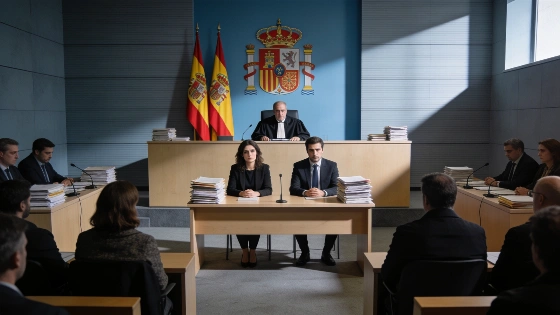
The investigation into the ‘Caso Koldo’ took a new turn as Jésica Rodríguez, former partner of ex-Transport Minister José Luis Ábalos, and Joseba García, brother of Koldo García, both refused to answer questions before the National Court. The judge, Ismael Moreno, had summoned them as suspects after the Supreme Court’s ruling highlighted their possible involvement in Rodríguez’s hiring at the public company Ineco, where she received a salary for two years without performing any work.
During the hearing, both Rodríguez and Garcia exercised their right not to testify. However, Joseba García briefly addressed the court, denying any role in Rodríguez’s recruitment and challenging the Supreme Court’s findings. The court had previously sentenced Ábalos to 24 years and three months in prison, Koldo García to 19 years and eight months, and Aldama to four and a half years, citing evidence that Joseba García, already employed at Ineco, helped facilitate Rodríguez’s irregular employment and shielded her from scrutiny.
Rodríguez had previously appeared as a witness during the Supreme Court proceedings, but this was her first appearance as a formal suspect, allowing her to remain silent. In earlier testimony, she admitted to receiving a salary from Ineco for two years without working and claimed Ábalos was aware of the arrangement. Her account of her duties at Ineco conflicted with Joseba García’s version, as she described being told by him to stay home and await instructions, while he insisted he was not her supervisor and had minimal contact with her.
Also summoned was Ignacio Zaldívar, a former senior Adif official, whose involvement in Rodríguez’s employment was noted by the Supreme Court. Zaldívar also declined to testify, leaving unresolved questions about his alleged role in transferring Rodríguez to Tragsatec, another public company, after her contract at Ineco ended. Zaldívar had previously testified as a witness, stating that Rodríguez was treated as a special case after Adif’s then-president, Isabel Pardo de Vera, informed him that the minister had complained about her being ‘bothered’ at Ineco. The issue reportedly stemmed from attempts to deliver meal vouchers to Rodríguez, who was unreachable at the office.
The ‘Caso Koldo’ has drawn significant attention due to its implications for public sector hiring practices and the potential misuse of government resources. The case underscores ongoing concerns about influence peddling and accountability within Spain’s public administration. Similar controversies over political pressure and the conduct of officials have surfaced in recent years, as seen when the PP demanded explanations from Interior Minister Fernando Grande-Marlaska regarding alleged interference with the Guardia Civil’s operations during Madrid’s regional holiday, detailed in this related report on political pressure in Spanish institutions.
For context, Ineco is a state-owned engineering and consultancy firm under the Ministry of Transport, often involved in major infrastructure projects. The scrutiny over Rodríguez’s employment has intensified debate about transparency and oversight in public companies. The National Court’s ongoing investigation may set precedents for how similar cases are handled in the future, especially as Spain continues to grapple with public trust in its institutions. The outcome could influence future hiring protocols and reinforce the need for clear accountability in public sector appointments.