
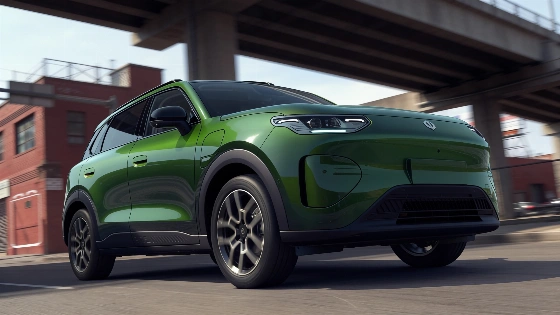
Leapmotor has officially introduced the B03X electric SUV in Spain, starting at just €17,500 with incentives. With advanced tech, strong performance, and local production planned, it poses a real challenge to established competitors.
Leapmotor has set a new benchmark in Spain’s electric car market by launching the B03X, a compact SUV that enters showrooms with a starting price of €17,500, including government incentives and energy efficiency certificates. This aggressive pricing, combined with a robust feature set and nearly 200 horsepower, puts direct pressure on established models like the Renault 4 E-Tech and BYD Atto 2.
The B03X is designed as a next-generation urban crossover, blending compact dimensions—4,270 mm long, 1,810 mm wide, and 1,635 mm high—with a wheelbase of 2,605 mm. Inside, it offers seating for five and a generous 510-liter boot, but the real highlight is its digital cockpit. The dashboard features a 14.6-inch central touchscreen and an 8.8-inch digital instrument cluster, both powered by the Qualcomm Snapdragon 8155 processor. The system supports wireless updates, integrated navigation, and voice control, aiming to keep the car’s tech current throughout its life.
Safety is another key focus. Depending on the trim, the B03X can be equipped with up to 21 advanced driver assistance systems (ADAS), including lane keeping assist, adaptive cruise control, and automatic emergency braking. These features are managed through a network of cameras and sensors, reflecting the growing expectations for safety in the segment.
Electric Power and Range
The B03X is built on a dedicated electric platform and comes with a single front-mounted motor. The entry-level version delivers 130 kW (177 hp), while the higher-performance variant reaches 145 kW (197 hp). Both offer 200 Nm of torque, enabling 0–100 km/h acceleration in 8.6 seconds and a top speed of 160 km/h. Power is sent exclusively to the front wheels.
Battery options include a 39.8 kWh LFP pack for up to 292 km of WLTP range, and a larger 53 kWh battery extending range to 382 km. Fast charging is supported: the smaller battery can charge from 30% to 80% in 16 minutes at 100 kW, while the larger pack accepts up to 133 kW for similar charging times. This positions the B03X as a practical choice for urban and suburban drivers alike.
Trim Levels and Market Position
Leapmotor has streamlined the lineup to two trims. The Life version pairs with the 177 hp motor, while the Design trim, offering a richer equipment package, is available only with the 197 hp motor. Both versions are aimed at simplifying the buying process and maximizing value for money.
Production of the B03X is set to begin in Villaverde, Madrid, from 2028, signaling Leapmotor’s commitment to the Spanish market and potentially increasing local content in the future. The brand is distributed in Europe through Stellantis, leveraging established networks to accelerate its expansion.
Competitive Landscape
With its €17,500 starting price (including €3,375 from the Plan Auto+ and €900 in CAE certificates), the B03X undercuts key rivals. The BYD Atto 2 starts at €21,465 after incentives, while the Renault 4 E-Tech is priced from €27,954. Other competitors like the Fiat 600e and Ford Puma Gen-E are even higher, at €30,000 and €28,800 respectively. This pricing strategy could reshape expectations in the segment, much as other Chinese brands have done in recent years.
For context, the arrival of affordable, tech-forward electric SUVs is not unique to Leapmotor. The trend is visible across the industry, as seen with the DS N7’s launch, which also targets established European players with bold pricing and advanced features. More details on this competitive shift can be found in this analysis of the DS N7’s European debut.
What This Means for Spain
The B03X’s entry signals a new phase in Spain’s electric vehicle market, where price, technology, and local production are becoming decisive factors. As more brands compete on value and innovation, Spanish consumers stand to benefit from greater choice and more accessible electric mobility. The coming years will reveal whether established European manufacturers can adapt to this new reality or if challengers like Leapmotor will set the pace.