The Leapmotor B10 isn’t rolling out of Spanish factories for buyers yet. Only test cars have left Stellantis Figueruelas so far. The real push for European production and pricing starts this autumn.
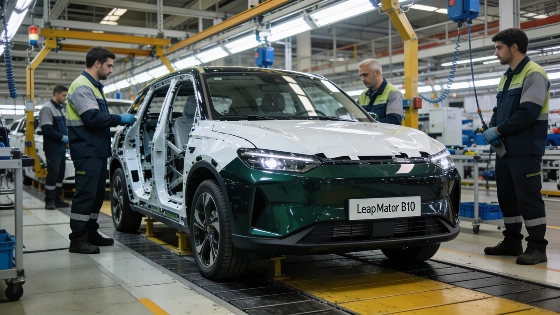
No Leapmotor B10 sold in Spain today comes from Zaragoza. Despite the recent attention, only preproduction B10s have left Stellantis Figueruelas. These are test cars, built to check the process and train workers. They are not for showrooms. The real change starts in mid-October. That’s when full production is set to begin and the first Spanish-built B10s will reach customers.
Until then, every B10 delivered to Spanish buyers is shipped from Jinhua, Zhejiang province. That’s been the case since the model launched. The promise of a European-made B10 is still out of reach. The Figueruelas plant is finishing its last prep work.
Some industry sources estimate that the Zaragoza plant could eventually reach a production capacity of up to 208,000 Leapmotor vehicles per year, depending on project evolution.
Stellantis has put serious money into this shift. After a long summer shutdown, line 2 at the factory got a full overhaul. New tools, robots, and assembly stations were added for the LEAP 3.5 platform, which is unique to the B10. This setup is very different from what’s used for the Opel Corsa, Peugeot 208, and Lancia Ypsilon, which are all built in the same plant.
Rubén Alonso, who leads the workers’ committee, told Aragón TV that only pilot cars have been built so far. These were made off the main line in special test areas. The real ramp-up will only start with the October launch.
The project has already created 400 jobs, with another 100 expected soon. That means up to 500 jobs tied directly to the B10. This isn’t just kit assembly. Figueruelas will handle stamping, welding, painting, and final assembly. The supply chain is changing too. The B10’s chassis will be made locally in Borja by Lieder Automotive, a joint venture between Fagor Ederlan and Duoli Technology.
According to several independent automotive publications, the preproduction phase at Figueruelas includes not just final assembly but also stamping, welding, and painting, adding significant value locally. This approach is designed to help the B10 qualify as European-made and avoid the 30.7% tariff imposed on Chinese imports. The industrial plan aims to go beyond simple screwdriver assembly, as confirmed by sectoral sources.
Leapmotor wants to avoid the 30.7% tariff on Chinese imports. To do that, the B10 needs enough value-added work done in Europe. That’s why Stellantis is pushing for more than just final assembly in Spain. Still, neither Stellantis nor Leapmotor has said if the B10 from Zaragoza will meet the requirement. They also haven’t said if any savings will reach buyers. The B10 launched in Spain at €29,900. Cutting out nearly a third of the import cost could lower prices or boost profits, but nothing is confirmed.
This whole move comes from Stellantis’ €1.5 billion investment in Leapmotor in 2023. That deal created Leapmotor International—Stellantis owns 51%, Leapmotor 49%. The joint venture has exclusive rights to build and sell Leapmotor cars outside China.
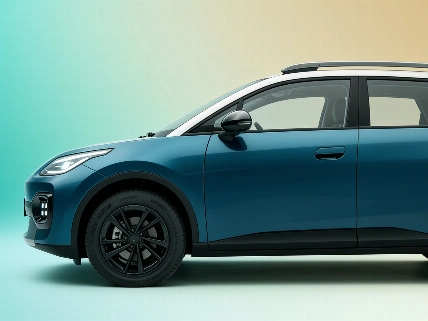
But one big question is still open: which B10 will Figueruelas actually make? When Stellantis CEO Antonio Filosa announced the plan in February, the idea was to start with the fully electric B10. Since then, the lineup has changed. Orders for the B10 REEV (range-extended electric vehicle) opened in January. Some reports from the test phase mention a 990 km total range, which only the REEV with its gasoline generator can reach.
Neither Stellantis nor Leapmotor has said if the Spanish line will build only the electric, only the REEV, or both. Both versions use the same body and 218 hp rear electric motor, but their specs are very different. The pure electric B10 has LFP batteries of 56.2 or 67.1 kWh, with 361 to 434 km WLTP range and fast charging up to 168 kW. The REEV has a smaller 18.8 kWh battery and adds a 1.5-liter gasoline engine (68 hp) as a generator. It gives 86 km electric range and up to 900 km combined.
There’s another unknown. In China, Leapmotor just launched a new B10 with 800V architecture. The European version is still at 400V. It’s not clear which version will be built in Zaragoza.
Sales data is also unclear. Leapmotor doesn’t break down B10 sales by version, but there are hints. The C10 REEV made up 29% of Leapmotor’s Spanish registrations in 2025, while the C10 electric was just 12%. In Italy, the REEV dominates B10 orders at 90%. In France, tax penalties on combustion engines push buyers to the pure electric. In Spain, the B10 led electric sales in July, but some reports say 80% of sales are REEV—though there’s no official confirmation. If Figueruelas focuses on the most popular version in Europe, the REEV could come first, and buyers wanting the pure electric B10 may have to wait longer for Spanish-built cars.
For now, nothing changes for customers. Until mid-October, all B10s delivered in Spain will still come from China. Prices and specs stay the same. Only after production ramps up and distribution starts will Spanish-built B10s reach dealers.
The B10 is just the beginning. Leapmotor says Figueruelas will add the B05 in 2027, then the A05 and A10, aiming to double output. Stellantis and CATL are building a gigafactory for LFP cells next door. The plant is set to become Leapmotor’s European base.
The Leapmotor B10’s Spanish production is a real test for Chinese brands trying to localize and compete on price and scale in Europe. What happens next will shape Stellantis’ plans and the future of electric cars in Europe. For a look at how other global players are moving heavy electric vehicles into real service, see what Amazon has reported earlier in Germany. The next few months in Figueruelas will show if Leapmotor’s European bet pays off or if tariffs keep the wall up.