Princess Leonor starts her political science degree at Universidad Carlos III. Unlike her father, she enters without a tailored academic path or exclusive privileges. The royal family insists on normality, but her admission process and presence still spark debate.
Princess Leonor’s first day at Universidad Carlos III in Getafe breaks with royal tradition. This time, the heir to the throne starts university without the custom academic path that shaped her father’s studies. The palace insists she will be treated like any other student. In practice, it is not that simple.
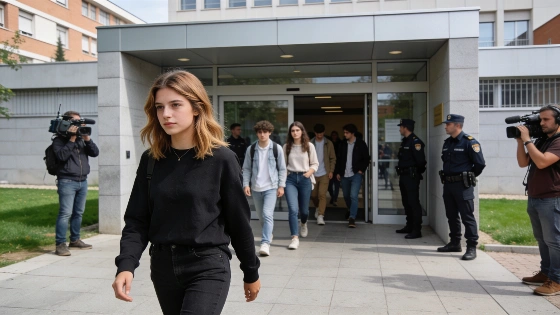
Despite efforts to keep things low-key, the campus was far from ordinary. More than fifty journalists waited outside building 9 as Leonor de Borbón Ortiz arrived to begin her political science degree. Security kept the press at a distance, shielding both Leonor and her classmates from the media. Inside, she met with rector Ángel Arias, vice-rector Pilar Otero, and dean Antonio Descalzo, and told reporters she was eager to start.
According to Spain's Ministry of Education, the Early Admission process used by Leonor is available to all students who completed their secondary education abroad, and in 2023, approximately 6.5% of new entrants at public universities in Madrid were admitted through this route.
— Spain's Ministry of Education
Her arrival was quieter than her father’s in 1988, when the press entered the classroom and 200 students gathered. This time, students and staff offered only a few polite claps and brief compliments. Leonor had never visited the campus before, which sits on Madrid’s outskirts and looks more like an American university, with open lawns and simple buildings.
The university’s leadership says nothing has changed. Rector Arias told faculty that teaching, grading, and schedules remain as usual. Leonor was admitted through Early Admission, a process that reserves up to 8% of places for students who finished high school abroad. Like her father, who studied in Canada, she did not take the standard university entrance exam (PAU), a point that has unsettled some given the high demand for her degree.
Faculty have discussed how to handle and assess the Princess, but Arias says no one asked to teach or avoid her classes. Political scientist Pablo Simón, who will teach her introductory course, admitted to some nerves but also pride. There is talk about whether Leonor will have a personal tutor, as her father did, but the university has not confirmed this.
Sociological studies cited by El País indicate that public trust in the Spanish monarchy has fluctuated in recent years, with youth support rising slightly after Leonor's increased public presence. However, debates about privilege and transparency remain prominent in Spanish media coverage of the royal family.
— El País
Choosing Universidad Carlos III—a young public institution—marks a shift from the tailored academic path her father had at Universidad Autónoma. Leonor will not follow a custom curriculum, though she will have extra lessons in constitutional law. Her tuition for the full degree will be €4,000 if she passes all courses. The royal household says it does not want to disrupt university life.
Student protests have been limited to critical videos from groups like Contracorriente and Pan y Rosas, who accuse the university of seeking royal prestige and using security as an excuse for repression. The Princess’s enrollment was handled with unusual secrecy: the rector delivered her application himself, and his team learned of her admission only minutes before it was announced.
Leonor starts university as public campuses in Spain see declining attendance and more competition from private schools. Universidad Carlos III, now 37 years old, is investing in campus upgrades, including renovations to the library Leonor will use. Funding per student is still lower than in other regions, but the university’s ability to attract outside resources helps fill some gaps.
Her classes run from nine to two, with seminars on Thursdays. The contrast with her father’s experience is clear: in 1988, he received small-group seminars instead of large lectures. Leonor’s classmates earned their places through the competitive PAU exam.
This moment is symbolic. The heir to the Spanish throne is now a student at a public university, at a time when private campuses are growing and public funding is debated. The Princess’s presence is a quiet endorsement of the public system, even as the university deals with aging buildings and limited resources.
The discreet handling of Leonor’s admission stands in contrast to the public recognition given to other figures in Spanish history, such as the Catalan exile Rosa Maria Duran, whose legacy was reported earlier.
Leonor’s entry into university is both a personal milestone and a calculated move by the monarchy to project normality. The lack of obvious privilege is a message, but the carefully managed process and selective transparency show the limits of this approach. The royal family’s attempt to blend in is more symbolic than real, as the mechanisms of access and discretion remain. Whether this gesture leads to real equality, or simply highlights the distance between the monarchy and the public, remains to be seen.