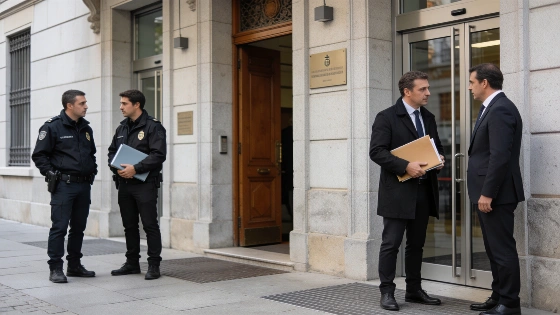
A Madrid court is investigating the acquisition of a €6.3 million penthouse by Planifica Madrid. The case involves multiple complaints, including one from the PSOE. The purchase was intended for Isabel Díaz Ayuso's temporary office.
The Madrid Investigative Court No. 8 has launched a formal inquiry into the purchase of a €6.3 million penthouse by the public company Planifica Madrid. The transaction, intended to provide a temporary office for Isabel Díaz Ayuso, is now at the center of a judicial investigation following a series of complaints about its transparency and legality.
According to information obtained by EL PAÍS, the court's action follows the receipt of four new complaints—three from private individuals and one from the PSOE—which have been forwarded by the Prosecutor's Office. These add to an earlier complaint filed by the political party Iustitia Europea, which initially triggered the opening of the case. The complainants allege that the acquisition was carried out without proper documentation, budget allocation, or public justification, raising suspicions of potential criminal conduct.
The penthouse purchase has already drawn significant public and political attention in Madrid. Critics point to the lack of transparency in the process and question the necessity of such an expensive property for temporary government use. The absence of a clear procurement file and the omission of the purchase from Planifica Madrid's annual budget have intensified scrutiny from both the opposition and civil society.
This is not the first time the property deal has sparked controversy. As previously reported, the Madrid regional government has faced mounting pressure over the penthouse, with earlier developments covered in detail when the lack of transparency first came to light. For further background on the political fallout and earlier legal actions, see this report on the initial political storm surrounding the penthouse purchase.
In the broader context, the case highlights ongoing concerns about public sector transparency and the management of government assets in Spain. Judicial investigations into high-profile property acquisitions are rare but tend to attract widespread attention due to their implications for public trust and accountability. The outcome of this inquiry could set a precedent for how similar cases are handled in the future, especially regarding the oversight of public spending and the responsibilities of regional authorities. As the investigation progresses, further details about the decision-making process and the roles of involved officials are expected to emerge.