A Madrid court has supported merging two investigations into elderly home deaths. This decision contradicts a previous ruling and could impact over 80 ongoing cases. The move renews hopes for a single, unified legal process.
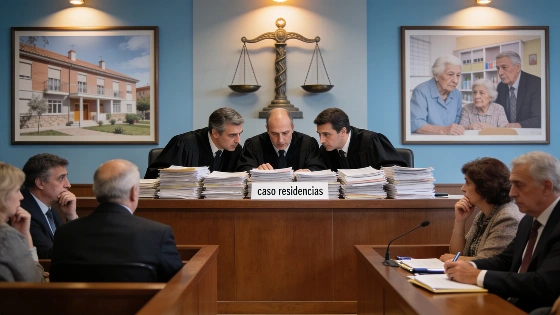
A new decision by the Audiencia Provincial in Madrid has reignited the long-running dispute over how to handle the sprawling ‘caso residencias’ investigations. On Wednesday, lawyers representing families affected by deaths in elderly care homes announced that three judges from the court’s Seventh Section have ordered the consolidation of two separate judicial proceedings. This marks a significant shift, as it directly contradicts an earlier ruling from another section of the same court, which had rejected the idea of merging cases just months ago.
The latest order specifically affects investigations led by the Juzgado 5 de Móstoles and the Juzgado 3 de Madrid. The judges argued that the similarities between these two cases make it necessary to combine them, aiming to prevent conflicting verdicts. Until now, the ‘caso residencias’ has been characterized by fragmentation, with more than 80 separate cases scattered across various courts in the Madrid region. This patchwork approach has led to frequent delays and overlapping efforts, frustrating families seeking accountability for the deaths of their relatives.
Back in April, the First Section of the Audiencia Provincial had ruled that over 20 ongoing cases should remain separate, effectively shutting down calls for a so-called macrocausa—a single, unified investigation. That decision was a blow to associations representing the families of the deceased, who have long argued that the deaths share a common political cause and should be examined together. The new ruling, however, opens the door for renewed efforts to consolidate the remaining cases, as legal sources now question whether this precedent could be used to push for broader unification.
The legal tug-of-war reflects deeper tensions within the Spanish judicial system over how to address large-scale incidents with widespread social impact. The current model assigns cases to courts based on geographic jurisdiction, but critics say this fails to capture the systemic nature of the events in question. The renewed debate comes at a time when public scrutiny of institutional responses to crises remains high. For context, similar legal controversies over the handling of sensitive information and judicial transparency have surfaced in Spain before, as seen when a leak of confidential data involving a former prime minister sparked national debate—details of which were covered in a previous report on legal gaps and privacy concerns.
While the immediate impact of the latest court order is limited to just two cases, its broader significance lies in the possibility of setting a new legal standard. If families succeed in using this decision to argue for the consolidation of all related proceedings, the landscape of the ‘caso residencias’ could change dramatically. The outcome will be closely watched by legal professionals, advocacy groups, and the many families still seeking answers after six years of fragmented investigations. The case also highlights the challenges faced by Spain’s judicial system in balancing local autonomy with the need for coordinated responses to complex, politically charged events. As the situation develops, further rulings from the Audiencia Provincial will determine whether the push for a macrocausa gains real momentum or remains stalled by internal disagreements.