Alberto Núñez Feijóo rejects the Government's housing decree while criticising activists over Olga's eviction in L'Hospitalet. His argument leaves out the congressional vote that helped remove the protection behind the case.
In February 2026, Congress rejected an extension of the anti-eviction moratorium. PP, Vox and Junts voted against the omnibus decree that contained it. The protection had been in force until 31 December 2025.
That vote matters in the case of Olga, who was evicted in L'Hospitalet and later died by suicide. Feijóo used her death to criticise the housing movement. He said nobody had camped outside or asked about her case. The Sindicato de Habitatge de L'Hospitalet and RTVE gave a different account. Activists did mobilise.
The dispute is now tied to the housing decree that the Government planned to approve on Tuesday. Feijóo rejected the measure before its final approval. He said the PP had not discussed it with the Government for even a minute.
At a business event organised by Cecot in Terrassa, he predicted that the decree would produce no results. Democrata reported that he presented the construction of one million homes as the alternative to the Government's regulatory approach.
The anti-eviction moratorium was extended in the Government’s proposed omnibus decree, but Congress rejected the package after opposition from PP, Vox and Junts. The vote left protections for vulnerable tenants weaker in a number of cases.
Feijóo described the Government's housing policy as part of the crisis, not as part of the response. He argued that market intervention would raise prices and reduce supply. In Terrassa, he also said that eight years of what he considers a wrong direction in housing could not be corrected with one royal decree.
His position follows the PP's broader argument. More construction, rather than rent and eviction rules, should expand supply. The reason is simple. Feijóo says the Government caused the damage it now wants to repair.
The case of Maricarmen was driving protests across Spain at the same time. She had been evicted in Madrid. Social pressure then pushed the property company to accept conditions demanded by the Sindicato de Inquilinas, and she is due to return home. Ara.cat reported that her case helped trigger a new wave of housing protests.
Catalan reports say Olga was hospitalised with suicidal intentions on the eve of the eviction, but the court nevertheless considered that the enforcement had to proceed. The L’Hospitalet city council later held a minute of silence after reports that she died by suicide in early September, months after being removed from the home where she had lived for more than 20 years.
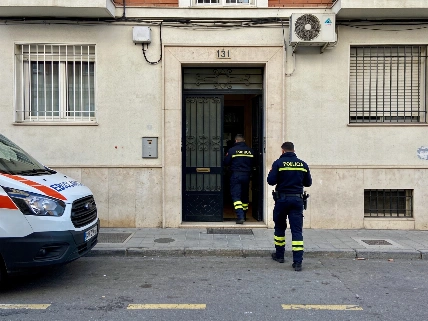
Olga had two daughters. The property was acquired by the investment fund Promontoria Coliseum Real Estate, and she was removed from the home where she had lived for more than 20 years. Catalan reports said she was hospitalised with suicidal intentions on the eve of the eviction. The court still decided that enforcement had to proceed.
She died by suicide in early September, months after the eviction, according to Catalan media reports. El Periódico reported that the L'Hospitalet plenary session held a minute of silence for her.
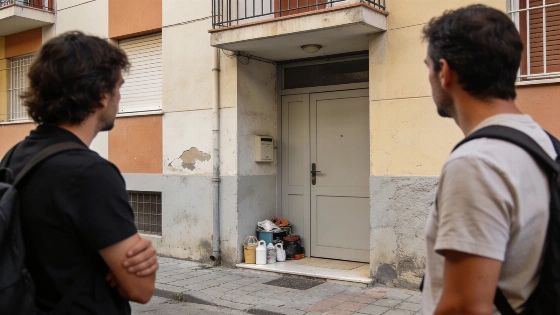
The housing movement disputes the claim that nobody mobilised for Olga. The Sindicato de Habitatge de L'Hospitalet and RTVE reported mobilisation around the case. The parliamentary decision against the moratorium also created the legal space for the eviction to proceed.
The argument is not about whether Olga's death was a tragedy. It is about who can invoke her case while leaving out the institutional decision that shaped its immediate background.
The same confrontation has appeared in other disputes involving the PP, including the earlier PP dispute over Ceuta. The housing dispute is more concrete. Feijóo rejects a Government measure while attacking activists who demanded action after a parliamentary majority that included his party helped end an existing protection.
Feijóo also said at Cecot that a legislature without a budget cannot be repaired by presenting accounts that lack support. He applied that argument to housing. The decree was still a proposal when he spoke, but his opposition was already clear.
On 29 September 2026, the Government was still seeking approval for the new housing decree in the Council of Ministers. Its prospects in Congress remained uncertain. Cabinet approval would not guarantee parliamentary support.
The package went beyond the immediate dispute over Olga. Ara.cat reported that the Government and Sumar were considering stronger protection against evictions affecting vulnerable families, tighter rules for seasonal rentals and restrictions on so-called vulture funds.
Reports said the protection could last until 2028 or even 2030. Parliament would still have to support every measure.
Feijóo can reject the decree and challenge its economic effects. His attack on the housing movement is incomplete without acknowledging the PP's vote against the moratorium. Activists did not ignore Olga's case. The parliamentary decision also shaped what followed.
That makes his intervention selective.