Rebeca Torró attacked Alberto Núñez Feijóo at a PSOE conference in Alicante. She accused Juan Jesús Vivas of blocking the government’s response to the migration crisis in Ceuta.
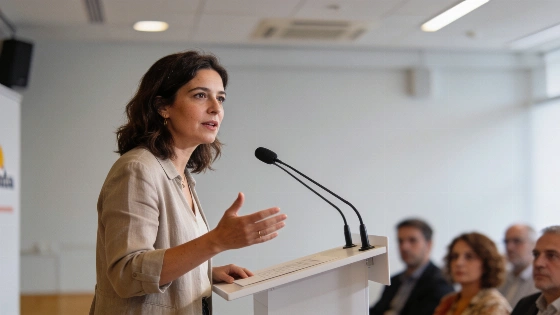
Rebeca Torró has turned the Ceuta crisis into a direct attack on Alberto Núñez Feijóo and Juan Jesús Vivas. The PSOE secretary of Organisation accused the PP leader of extending his political influence to the party’s regional leaders. She made the remarks at the opening of the PSPV Political Conference in Alicante.
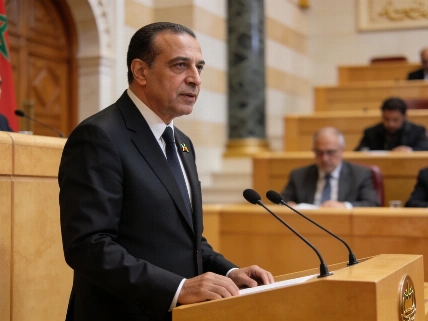
Her strongest criticism was aimed at Vivas. Torró said the president of Ceuta had moved from cooperating with the central government to blocking its response to what the government calls a migration crisis. She linked that shift to his refusal to allow minors to be transferred to the peninsula. Torró said the move would help restore normality.
Spain’s Ministry of Youth and Childhood says it proposed an emergency transfer of 500 girls from Ceuta to specialised facilities on the peninsula, while legal guardianship would remain with the autonomous city.
Her message to the PP was direct. If the party will not cooperate, she said, it should at least avoid making the situation harder.
Torró said Feijóo and Vivas were competing with Vox instead of defending Ceuta’s residents. In her account, the government is trying to find an answer to each problem, while the opposition turns every proposal into another political dispute. She also accused the PP of reducing its response to repeated calls for elections and of treating the Ceuta crisis as a partisan fight.
The confrontation follows a wider PP mobilisation over Ceuta, including an earlier report on party leaders joining protests. Torró’s speech adds another element to the dispute. It puts Vivas’s conduct at the centre of the PSOE’s criticism instead of presenting the crisis only as a disagreement between Madrid and the autonomous city.
According to official Spanish government figures cited on 13 September 2026, 5,321 people had voluntarily returned from Ceuta to Morocco since 10 August, while almost 1,000 more were still in the process of arranging their return. The government also estimated on 18 September that around 9,000 to 10,000 people remained in Ceuta after the July influx, although public figures differ depending on whether they refer to all arrivals or only minors.
She broadened the attack to the electoral system and the courts. Torró accused the PP of casting doubt on the electoral process and of dragging the Tribunal Supremo into what she called a campaign against the voting rights of thousands of people. She said the party had first targeted exiles from the Franco era and was now turning its attention to their children and grandchildren.
Like Justice Minister Félix Bolaños in the Senate earlier this week, Torró called on the high court to act quickly on the law of grandchildren. The law is currently suspended as a precautionary measure. She also claimed that the judicial decision bore the signature of a magistrate who had once told Feijóo that he wanted to see him become president.
The political message of Torró’s speech is clear. The PSOE is presenting Ceuta as a test of whether the PP will cooperate with the government or compete with Vox. By placing Juan Jesús Vivas inside that national dispute, the party is repeating the position put forward by the Ministry of Youth and Childhood. The ministry says legal responsibility for the minors remains with Ceuta and that transfers to the mainland are the only workable way to ease pressure on local reception facilities.
On 13 September 2026, the ministry said around 2,100 migrant minors were registered in Ceuta’s reception system. Madrid had already offered funding, accommodation and legal support. The process was waiting for formal approval from the autonomous city.
The PP has publicly opposed transferring minors to the peninsula. That position has been reported as broadly matching Vox’s stance. Feijóo has also taken the Ceuta dispute to the European level. He met the EU commissioner responsible for migration and argued that the priority should be to speed up departures rather than find additional accommodation for arrivals in Ceuta. The party later welcomed European Parliament language that it interpreted as support for Spanish sovereignty and a tougher message to Morocco.
By linking the dispute to the Tribunal Supremo and voting rights, the PSOE has chosen escalation instead of institutional de-escalation. Based on the facts presented here, the government’s handling of Ceuta is no longer only an administrative issue. It has become one of the main lines of attack between the PSOE and the PP.