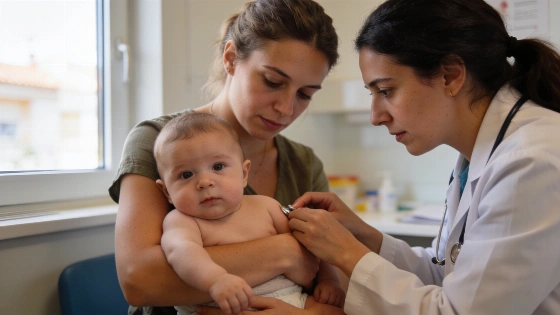
A Sanofi study of 1,322 Spanish parents finds that most feel calmer after their children receive RSV immunisation. Many families still know little about the virus and remain worried about hospital care.
The Sanofi study questioned 1,322 parents of children aged up to three. It found that 95% of families who immunised their children against respiratory syncytial virus felt calmer about the infection three seasons after Spain introduced its immunisation plans.
Reassurance has grown faster than detailed knowledge of RSV. The study also examined awareness of bronchiolitis, one of the main complications linked to the virus.
In Andalusia, regional authorities said that 55,000 infants were immunised against RSV in the previous season, representing 96% of newborns. The region has allocated €15.2 million for its 2026/27 campaign.
For 84% of respondents, a doctor gave them their first explanation of RSV. Family and friends came next at 31%. Nurses, search engines and social networks were each mentioned by more than 20% of participants.
The doctor remains the decisive source.
Knowledge of the virus is rising, but it is far from complete. Four in ten families link RSV to specific childhood infections. Another 42% know that it affects babies or young children. That figure is higher than the associations made with flu at 27% and COVID-19 at 16%.
The Spanish National Centre for Microbiology reported three paediatric RSV infections in the previous epidemic season involving a variant that evaded nirsevimab. Earlier ISCIII data indicated that immunised infants under one had an 80% lower risk of RSV hospitalisation.
Yet 27% of parents know the virus only by name. They do not understand what it can cause. Another 18% say they have never heard of it.
That gap matters. Families are weighing more than the chance of infection. They are also thinking about bronchiolitis and hospital care.
Almost every participant said that RSV or bronchiolitis would affect the baby's parents emotionally to some degree. Hospital admission causes the most anxiety. Eight in ten families said they fear it.
The worry reaches beyond the doctor's office. Almost eight in ten parents believe a baby's infection could hurt household finances. Six in ten think they would have to miss work to care for the child.
According to the study, the main financial pressure comes from absence from work and lost income. Direct medical and care costs play a smaller part. Families examining wider pressures around healthcare and daily life can also consult earlier coverage on changes affecting access to medical support in Spain.
RSV prevention now runs across several Spanish regions. It is not a one-off programme. Andalusia began its 2026/27 campaign on 21 September 2026.
According to the Junta de Andalucía, the regional strategy has protected 165,737 infants since 2023. Campaigns in the Basque Country, Galicia and Madrid were continuing or preparing to start in late September and early October 2026.
Regional surveillance in the Valencian Community recorded zero RSV cases during weeks 37 and 38 of 2026. That does not remove the seasonal risk. It shows that transmission can be minimal during some weeks.
The campaigns continue.
Families who declined immunisation most often cited a lack of information. Yet 84% of those parents said they would have protected their baby if they had received more information before making the decision.
The study points to a simple pattern. Protection makes families feel safer, while information helps them decide. Concern has not disappeared. Clear guidance from paediatricians can reduce uncertainty, but many parents still need a better explanation of RSV, its risks and the limits of immunisation.