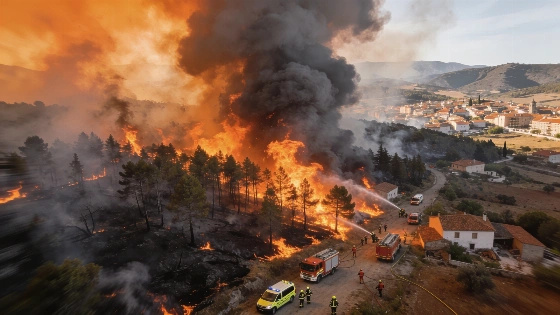
Three major wildfires continue to burn out of control in Madrid. Over 10,000 residents have been evacuated from several towns. Authorities warn that strong winds could worsen the situation.
Madrid has entered a state of national emergency as three large wildfires continue to burn without containment in the region’s western Sierra. Despite overnight firefighting efforts described as “effective” by the regional government, none of the blazes—two in Villa del Prado and one in San Martín de Valdeiglesias—have been brought under control or fully surrounded. The situation remains critical, with authorities warning that Friday’s weather, especially strong winds, could further complicate the response.
Responsibility for managing the crisis shifted late Thursday, when the regional government requested that La Moncloa take command. The national executive now leads the operation, coordinating more than 270 personnel from fire brigades, forest agents, and the Unidad Militar de Emergencias (UME). The number of evacuees remains above 10,000, affecting residents in Aldea del Fresno, Villa del Prado, Pelayos de la Presa, and San Martín de Valdeiglesias. So far, there have been no reports of injuries or smoke-related illnesses, but material losses are mounting.
According to the Guardia Civil’s Thursday assessment, at least 20 homes have been destroyed in Villa del Prado, with 225 plots and 20 vehicles also damaged. The first fire in Villa del Prado, which originated Wednesday in Almorox (Toledo), has already scorched more than 890 hectares—600 of them within Madrid’s borders. Emergency medical teams from Summa 112 have been on site throughout the night, focusing on chronic patients, though no further details on medical assistance have been released.
Firefighters are bracing for another challenging day, as shifting winds threaten to spread the flames further. The scale of the evacuation and the destruction of property highlight the severity of the crisis. This event follows a pattern of extreme weather and wildfire risk seen across Spain in recent years. For example, a recent major wildfire in Tarragona’s Vall d’Infern also required a significant emergency response, underscoring the growing challenges posed by climate and environmental factors.
Spain’s wildfire season has become increasingly intense, with longer periods of high risk due to persistent drought and rising temperatures. The Sierra Oeste region, with its mix of forest and rural communities, is particularly vulnerable. Authorities continue to urge caution and compliance with evacuation orders, as the full extent of the damage and the timeline for containment remain uncertain. The ongoing emergency in Madrid serves as a stark reminder of the need for coordinated action and preparedness in the face of escalating natural threats.