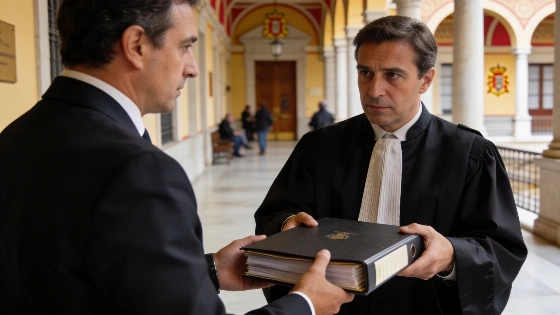
A Madrid judge has handed the ‘Caso Leire’ probe to the National Court, citing evidence of a broader criminal network. The case now points to figures with greater authority within the PSOE structure.
The investigation into the so-called ‘Caso Leire’ has taken a new turn after Madrid judge Arturo Zamarriego decided to transfer the case to the National Court. In his ruling, Zamarriego highlighted that the three individuals initially under scrutiny—Leire Díez, Javier Pérez Dolset, and Pere Rusiñol—may only represent secondary roles within a much larger and more complex criminal network. The judge’s decision was prompted by evidence suggesting that individuals with higher authority could be orchestrating efforts to interfere with judicial proceedings affecting the PSOE and the Spanish government.
The case, now in the hands of National Court magistrate Santiago Pedraz, has already expanded to include prominent figures such as Santos Cerdán, the former secretary of organization for the PSOE. Zamarriego’s resolution, dated August 11, orders the full transfer of the case file, including all separate pieces, to Pedraz. The judge argued that the facts of both investigations are now so closely linked that they must be handled as a single case to ensure clarity and efficiency.
According to the court documents, the ongoing investigation has uncovered a suspected network involving politicians, socialist party members, lawyers, and businesspeople. This group is believed to have worked together to destabilize judicial processes that could impact the PSOE, the government, and those close to Prime Minister Pedro Sánchez. The judge specifically noted the role of the UCO (Central Operative Unit of the Civil Guard), whose work has helped trace the alleged organization’s structure from Leire Díez up to higher-ranking individuals.
Evidence collected during the investigation points to Leire Díez allegedly offering payments or favors in exchange for information that could harm senior Civil Guard officers and members of the Anti-Corruption Prosecutor’s Office. The documentation also suggests that Díez may have received intellectual or financial backing from Santos Cerdán, who at the time was the PSOE’s number three. It is alleged that Cerdán agreed to compensate Díez for her services using party funds.
This development follows the earlier decision by the Madrid court to halt its own probe and allow the National Court to take over, as previously reported in a related story on the transfer of the case to Judge Pedraz at the Audiencia Nacional. For further background on the procedural shift and its implications, see the detailed coverage in this recent report.
The ‘Caso Leire’ has drawn significant attention due to its potential impact on Spain’s political landscape. The case highlights the challenges faced by the judiciary in investigating alleged attempts to influence or disrupt legal proceedings involving major political parties. The involvement of high-ranking party officials and the merging of separate investigations underscore the seriousness of the allegations. As the National Court continues its work, the outcome could have lasting consequences for the PSOE and the broader political environment in Spain. The case also illustrates the increasing complexity of judicial investigations into political corruption and the importance of coordination between different judicial bodies.