Madrid’s playgrounds are drawing criticism for their lack of trees and grass. Parents report safety concerns and social discomfort. Many are now seeking alternative spaces for their children during the summer months.
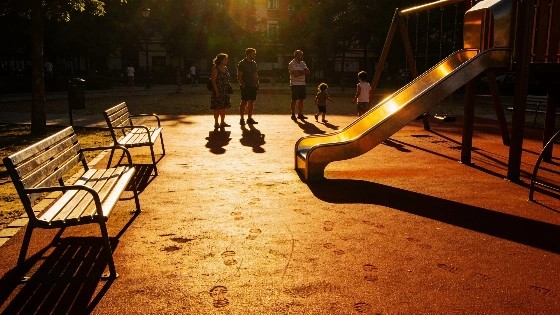
Madrid’s public playgrounds are facing renewed criticism as parents voice concerns over the absence of shade, natural grass, and adequate safety measures. Many playgrounds in the city feature metal slides that become dangerously hot in summer and rubber flooring that intensifies the heat, making outdoor play challenging for children and their families. The situation has led some parents to question whether municipal design choices are inadvertently discouraging extended visits during the hottest months.
For many families, playgrounds have become a daily destination, often consuming more time than their own homes. The routine is driven by children’s need for active play, with parents frequently feeling like bystanders or even captives to their children’s energy. Regardless of where the day begins—school, home, or a relative’s house—families often find themselves ending up at the nearest playground, navigating a landscape that can feel both monotonous and fraught with minor hazards.
Safety remains a central concern. Playgrounds are typically fenced and padded, designed to balance children’s desire for adventure with parents’ need for reassurance. Yet, the simulated sense of danger—through swings, slides, and climbing frames—does little to alleviate the underlying anxiety many parents feel about potential accidents. The lack of natural elements like trees and grass only adds to the discomfort, especially during Madrid’s intense summer heat.
Social dynamics within these spaces are also under scrutiny. Parents describe playgrounds as “prisons” for adults, with brightly colored fences and benches exposed to the sun. While children play with a mix of excitement and instability, adults often retreat into their phones or become overly involved in their children’s games. Some parents find it easy to strike up conversations with others, bonding over shared experiences of parenthood, while others struggle with the forced intimacy of these enclosed spaces.
Managing interactions between children presents its own set of challenges. Parents often find themselves mediating disputes over toys or play equipment, sometimes stepping in to resolve conflicts when their children are too young to advocate for themselves. The experience can be stressful, especially when faced with repeated incidents involving the same children or families. In some cases, parents consider changing playgrounds altogether to avoid uncomfortable encounters, effectively becoming “fugitives” in search of a more welcoming environment.
The search for better playgrounds is not unique to Madrid. Across Spain, families are increasingly seeking out green spaces and shaded areas, particularly as heatwaves become more frequent. According to recent reports, the lack of natural shade in urban playgrounds is a growing concern, prompting calls for municipal authorities to invest in more child-friendly designs. The issue of public space and safety has also been highlighted in other contexts, such as the challenges faced by residents during wildfires in Madrid and Ávila, where thousands were evacuated and public spaces became critical shelters.
As summer continues, many Madrid parents are using the break to explore alternative leisure spaces for their children, hoping to find playgrounds with more trees and less social tension. The experience underscores the importance of thoughtful urban planning and the need for public spaces that prioritize both safety and comfort for families. With the new school year approaching, the question remains whether city authorities will address these concerns or if families will continue their search for better options.
In Spain, playground design is typically managed at the municipal level, with varying standards across regions. While some cities have begun to incorporate more natural elements and shade structures, progress in Madrid has been slow. The ongoing debate reflects broader issues of urban livability and the role of public spaces in supporting family life, especially as climate conditions evolve and community needs change.