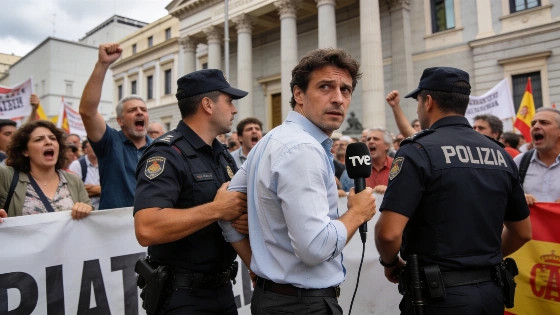
A mass demonstration in central Madrid saw thousands demand early elections and an investigation into Pedro Sánchez for alleged betrayal. The event, intended as a show of unity, instead highlighted deep divisions between PP and Vox over how far to escalate their opposition.
Gran Vía was packed. Spanish flags waved above a crowd that shouted for early elections and demanded Pedro Sánchez face charges of betrayal. The protest was loud, angry, and anything but unified.
Santiago Abascal, Vox’s leader, drew a line before the march even started. He slammed the Partido Popular (PP) for refusing to join his push for a joint government in Ceuta. He also called out the PP for not backing his demand to bring Sánchez before the Supreme Court. "I sincerely do not understand it," Abascal said. He accused the PP of dodging the toughest fight against the prime minister. Reuters and EFE reported that both PP and Vox leaders joined the demonstration. The march ran from Plaza de Cibeles to Moncloa. It was meant to show national strength. That unity fell apart fast.
The demonstration was organized by Sociedad Civil Española, a platform that unites more than 150 associations and previously held a similar protest in May, which drew tens of thousands of participants.
Sociedad Civil Española, a platform that brings together over 150 right-leaning groups, organized the protest. Their manifesto called for legal action against Sánchez for betrayal and for putting state security at risk. But the PP kept its distance. Miguel Tellado, the party’s secretary general and top PP official at the protest, made it clear: "The manifesto is their manifesto." He said the PP wants elections and shares worries about government neglect. But the party would not echo Vox’s betrayal charges. Tellado pointed to ongoing cases in the Audiencia Nacional. He said the courts, not political stunts, should decide. EFE reported that the PP publicly stepped back from the harshest language in the manifesto. The party only backed the call for elections, not the legal accusations against Sánchez.
The crowd was restless. Chants of "Ceuta no se vende, Ceuta se defiende" and "Pedro Sánchez a prisión" rang out. Paco, one protester, held up a poster showing Sánchez behind bars. Others said they feared the government would rig the next election. "Of course he’s capable," said an older man, echoing the crowd’s distrust. Young people wrapped in Spanish flags complained about housing and jobs. Few knew about a separate housing protest happening that same day in Madrid. The protest’s backdrop was the recent migrant surge in Ceuta at the end of July. Organizers and right-wing parties pointed to figures of 70,000 to 80,000 arrivals. That number became a rallying cry.
Despite the anger, the split between Spain’s main conservative parties was obvious. Vox wants to ramp up the fight, demanding criminal charges and direct accusations of betrayal. The PP is sticking to the courts and official channels. They worry that harsh words could scare off moderate voters. The split was clear in the street. Abascal marched at the front, surrounded by supporters. Tellado showed up later and kept away from the loudest slogans.
According to official statements, there is currently no confirmed judicial process initiated against Sánchez for 'betrayal'; the calls remain political demands, with the PP referencing ongoing legal proceedings but not supporting new charges.
Anyone watching Spain’s political scene saw the right’s internal fight on full display. The protest was not a show of unity. It was a public clash over strategy and ambition. Previous analysis has shown that Sánchez’s leadership splits not just left and right, but the opposition itself.
The conservative bloc cannot agree on how far to go. The PP’s careful approach keeps it close to the institutions, but risks looking weak to voters who want a fight. Vox is betting everything on hardline attacks. But that can mean standing alone. The result? A fractured opposition. For Sánchez, that means less pressure from the right than he might have feared.