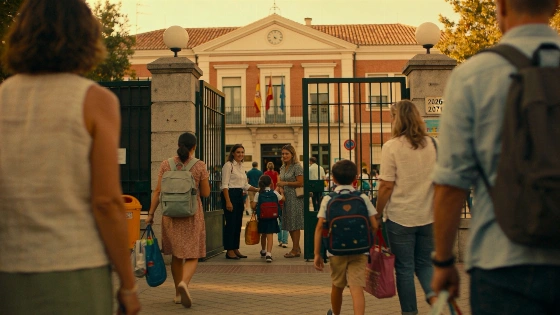
Madrid schools will open earlier than anywhere else in Spain. The 2026-2027 calendar brings several long weekends and a shorter academic year. Key dates affect families, students and teachers across the region.
The Community of Madrid has confirmed a school calendar for 2026-2027 that stands out for its early start, a dense cluster of public holidays in the first term, and an earlier finish to the academic year. Most students in the region will return to classrooms on Monday, 7 September, making Madrid the first in Spain to begin the new school year. This applies to pupils in the second cycle of Educación Infantil, Primary, Special Education, and related integrated arts programs. Secondary, Bachillerato, Vocational Training, professional conservatories, and Official Language Schools will follow on 8 September, while students in Higher Artistic Education start on 9 September. Adult Education centres and first-year students in Arts and Design will begin later, on 21 September.
Public universities in Madrid will also stagger their start dates: Universidad Politécnica opens on 2 September, Universidad de Alcalá, Autónoma and Carlos III on 7 September, Rey Juan Carlos on 10 September, and Complutense on 14 September. These early dates set the tone for a year that will end sooner than usual for most educational stages. The last day of classes for the majority—including Infantil, Primary, Special Education, ESO, first-year Bachillerato, Vocational Training, arts schools, and Adult Education—will be 18 June 2027. Official Language Schools will continue until 25 June, while nursery schools and first-cycle Infantil units will remain open until 30 July. The end date for second-year Bachillerato students will depend on university entrance exams and admission processes.
The first trimester is marked by a series of long weekends. The national holiday on 12 October falls on a Monday, creating the first bridge. The All Saints' Day holiday is observed on 2 November, as 1 November is a Sunday, forming a second bridge. Constitution Day and the Immaculate Conception on 7 and 8 December will combine for a four-day break. In Madrid city, 9 November is also a holiday for La Almudena, adding a fourth bridge to the term. These concentrated breaks will impact school routines and family planning throughout the autumn.
Christmas holidays will start later than in previous years but will be extended, running from 23 December 2026 to 10 January 2027. With 7 and 8 January designated as non-school days, students will not return until Monday, 11 January. The second term brings another extended break: 12 and 15 February are non-teaching days, creating a four-day 'Carnival' or 'Semana Blanca' bridge when combined with the weekend. In March, 19 and 29 March are also non-teaching days, framing the Easter holidays from 20 to 28 March. This arrangement gives students 11 consecutive days off, the longest break outside summer.
Each municipality may add its own local holidays, further shaping the school year for families. The calendar's structure, with its early start and multiple bridges, is likely to affect travel, childcare, and work schedules across the region. For those interested in how Madrid's cultural life adapts to the school calendar and public holidays, recent events such as the city's free end-of-summer festivals have shown how local traditions and school schedules often intersect—see the coverage of Madrid's cultural week at this report on local festivities.
Madrid's approach to the 2026-2027 school year reflects broader trends in Spanish education, where regional governments set their own calendars within national guidelines. The early start and dense holiday schedule may influence family routines, tourism, and even local business activity. For parents and teachers, the key will be careful planning around the many bridges and extended breaks. As always, the final calendar will also depend on local adjustments and any changes in public health or education policy.